Full name: Santo Domingo
Founding date: August 30, 1775 (relocated 2.5 miles east in 1798) Mission #20
Catholic Order: Dominican
Founded by: Padre Miguel Hidalgo, Padre Manuel Garcia
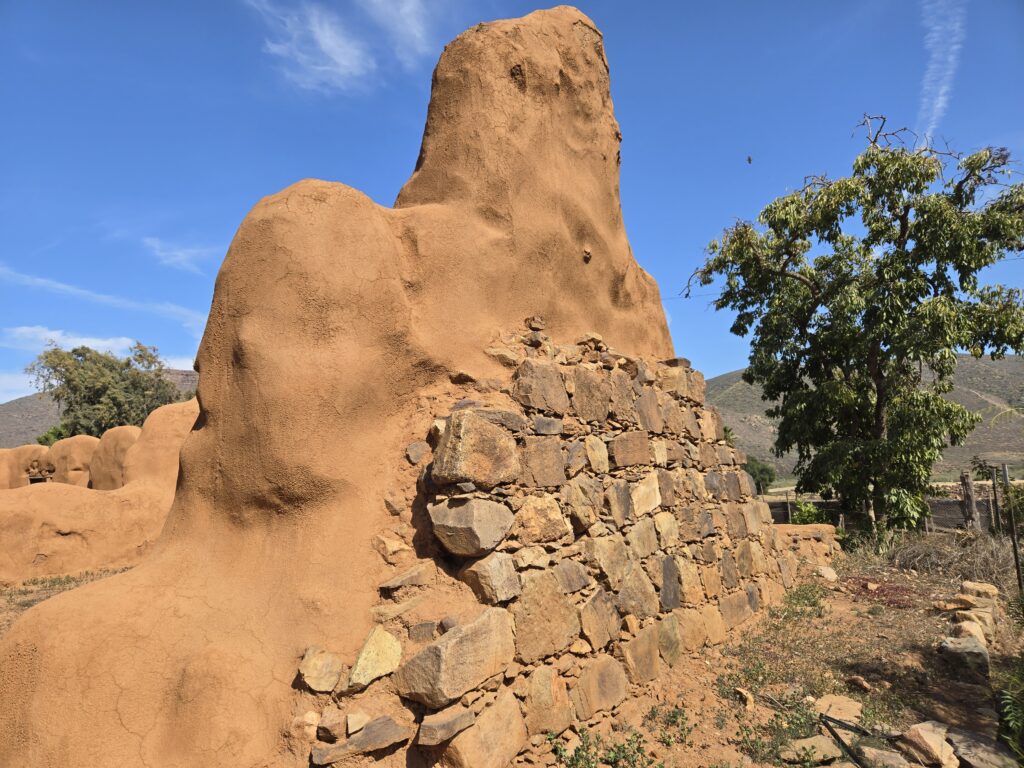
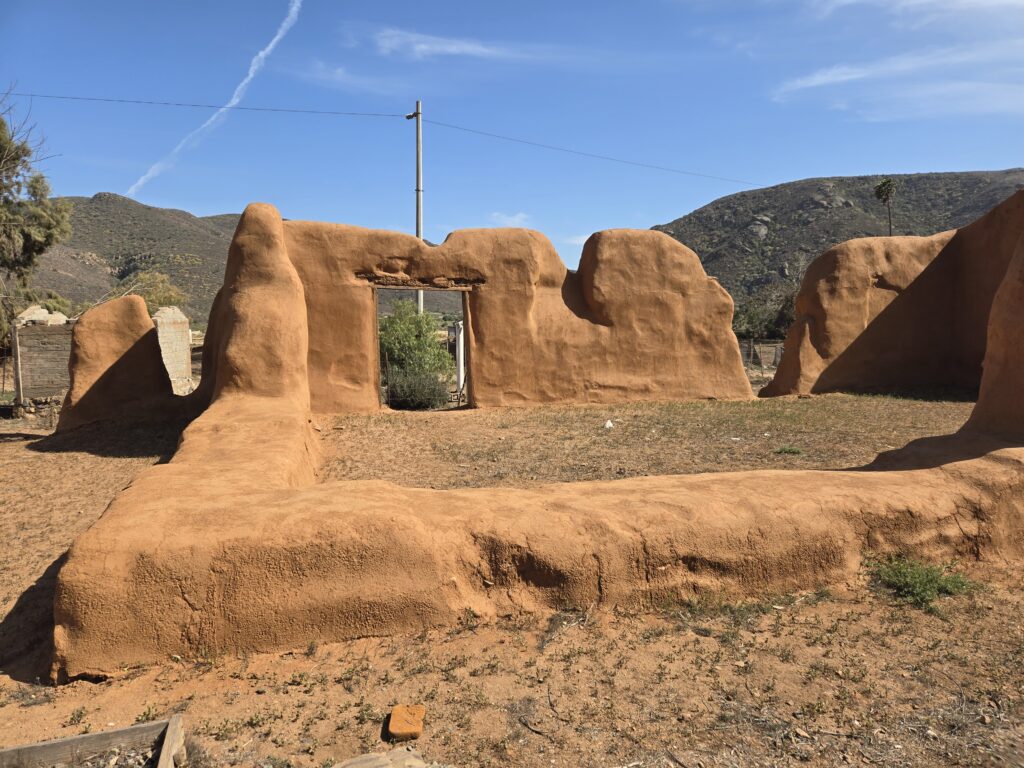
Condition: Adobe ruins at second site.
Closing date: Closed in 1822
GPS: 30.770889, -115.937222
Access: Mex. #1, Km. 169, south of Ensenada, 5 miles east.
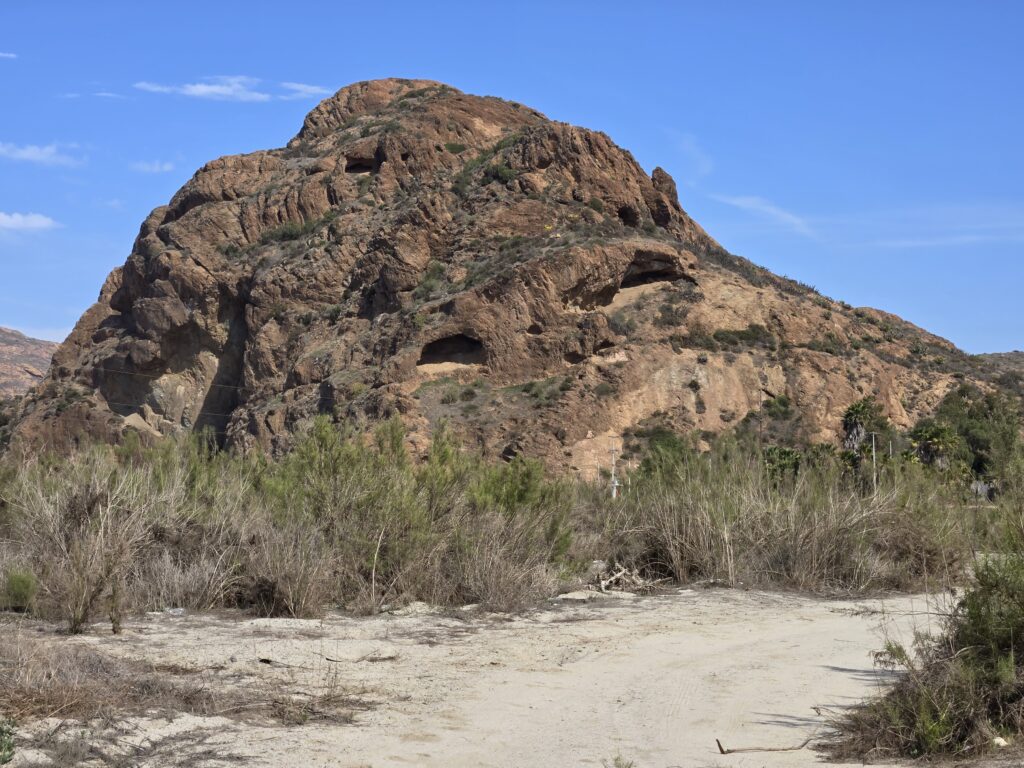
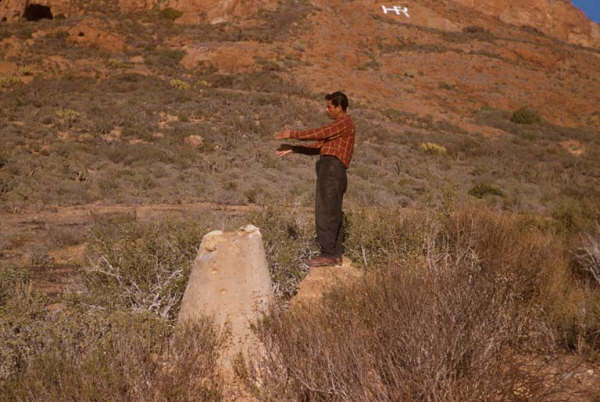
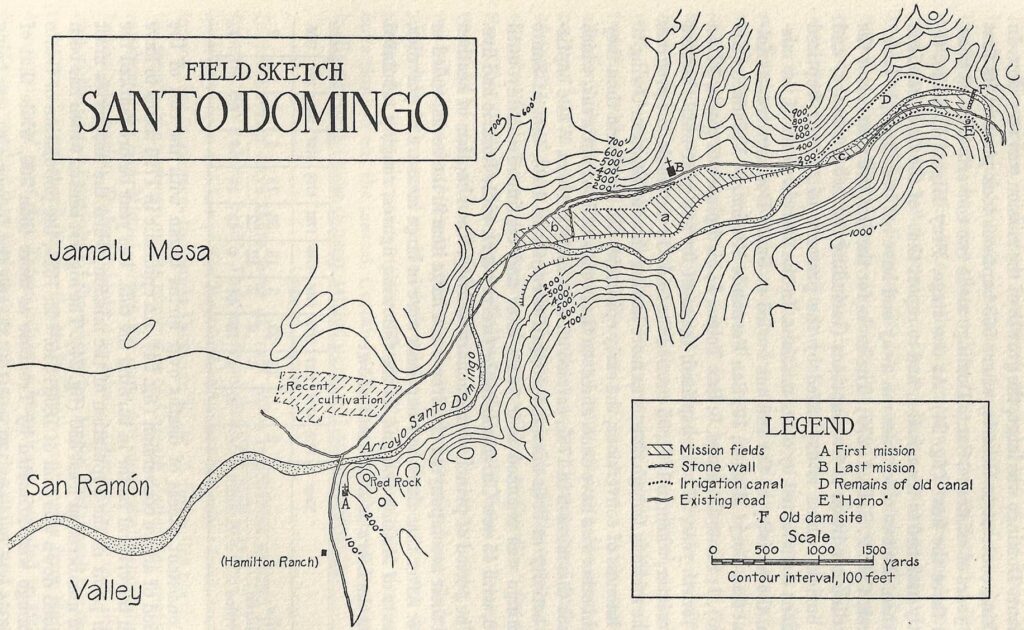
The second Dominican California mission was named Santo Domingo and located at the mouth of a long valley, a few miles from the ocean. A red-colored cliff was next to the new mission and the first services were held on August 30, 1775, in a cave in the cliff. In 1798, the mission was relocated 2.5 miles inland from the red cliff.
> To see where this mission is, maps and directions at bottom of page <<
First Site (1775-1798)
Final Site (1798+):
2025 photos by David Kier & Dave W.
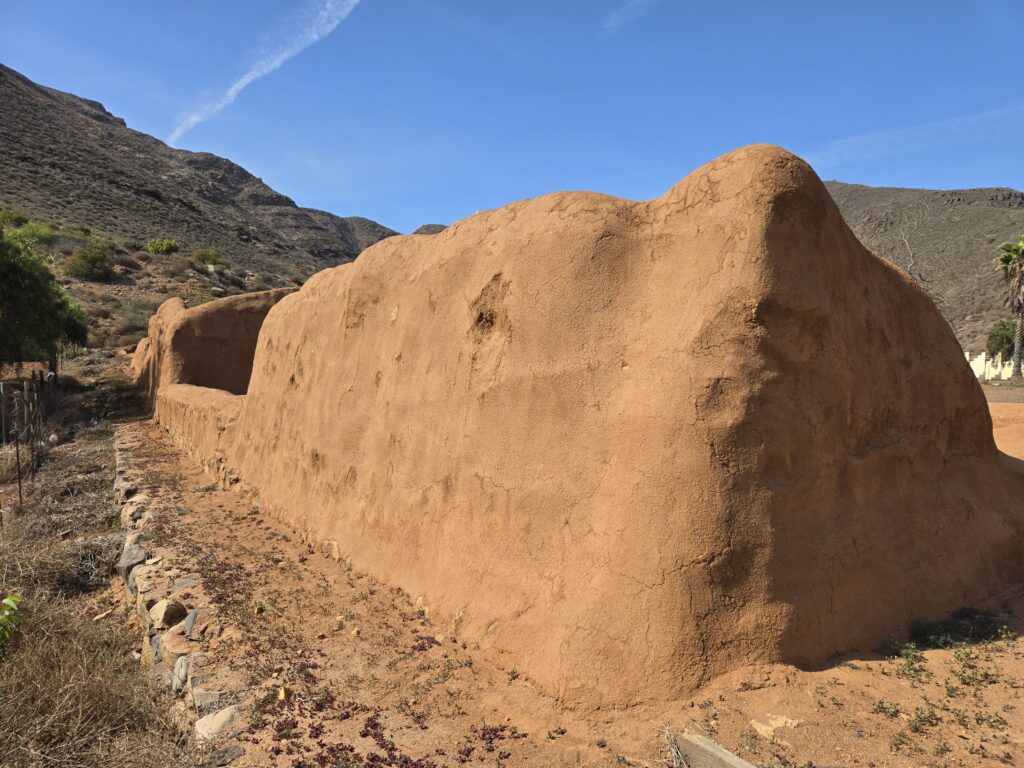
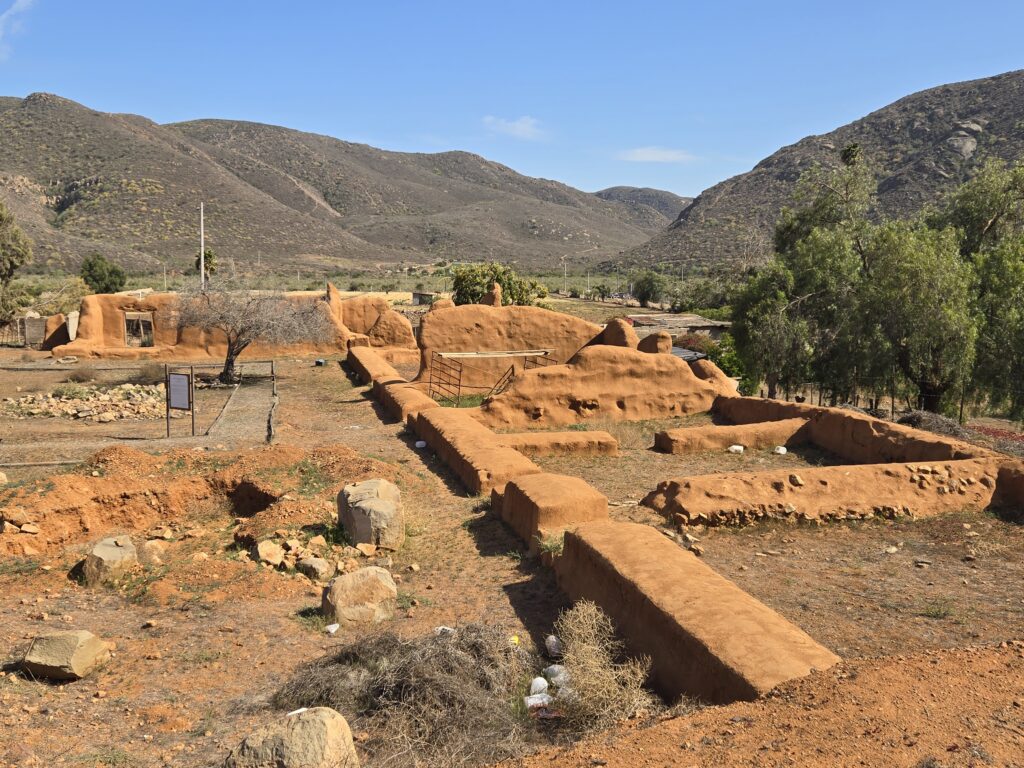
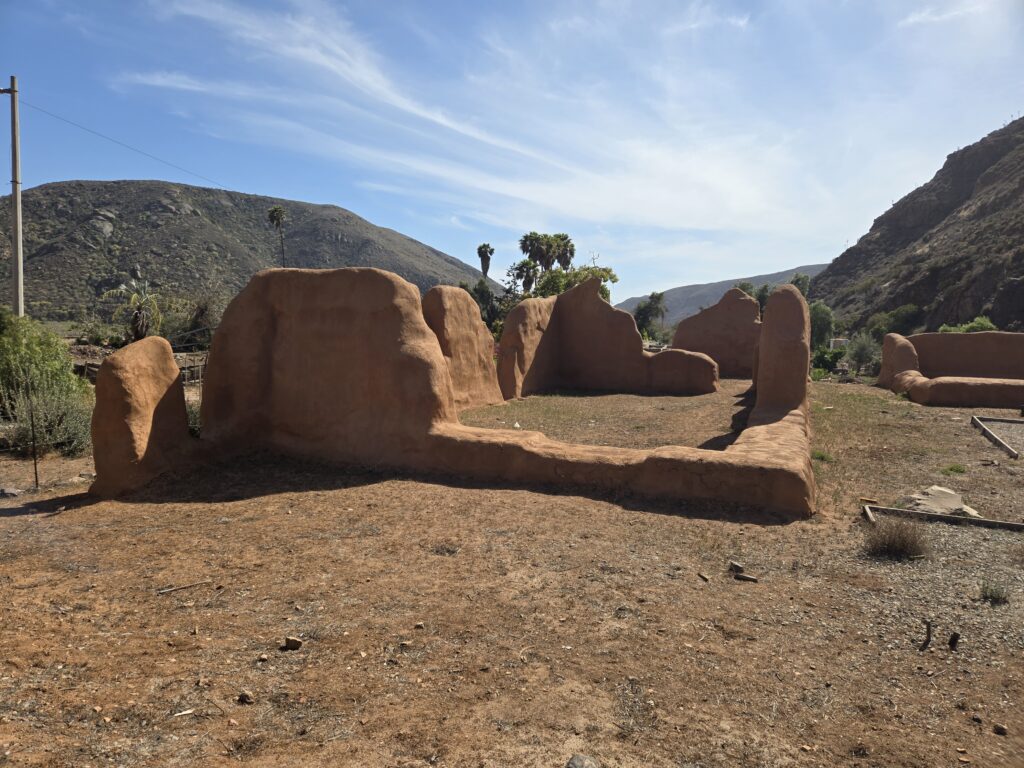
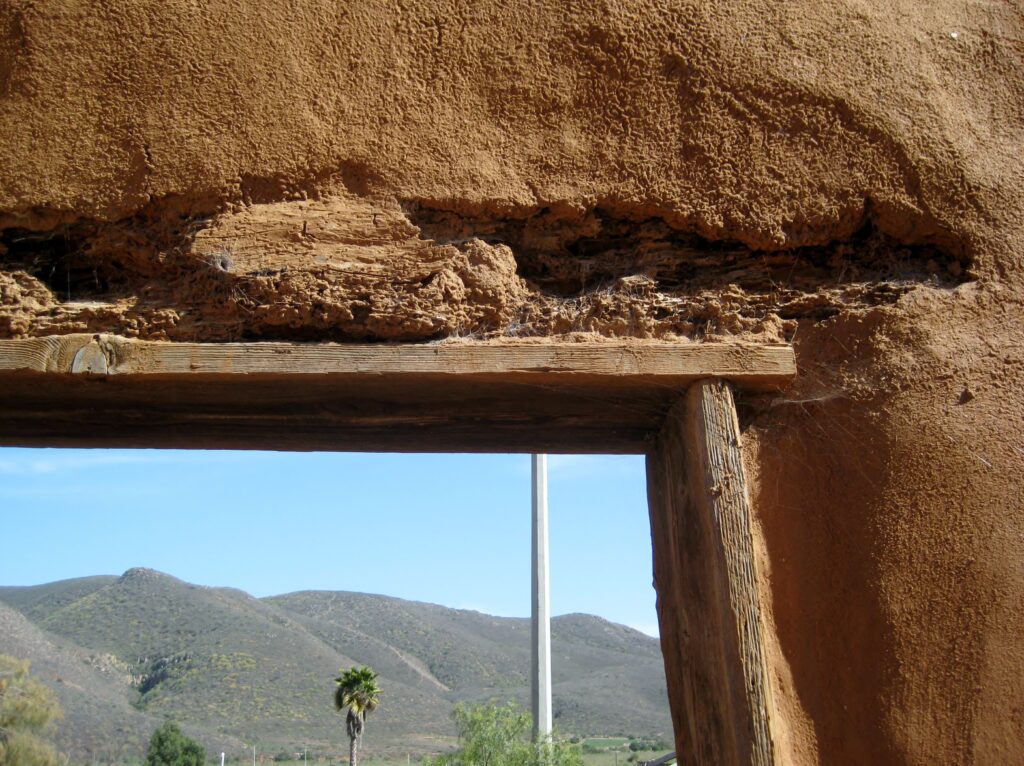
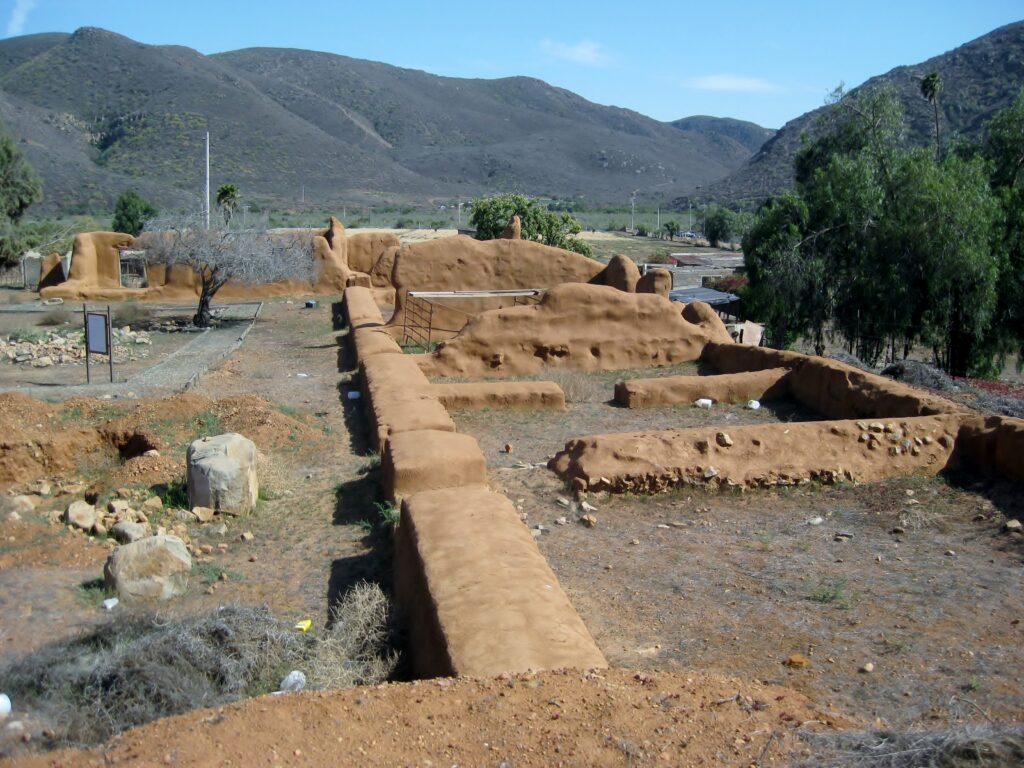
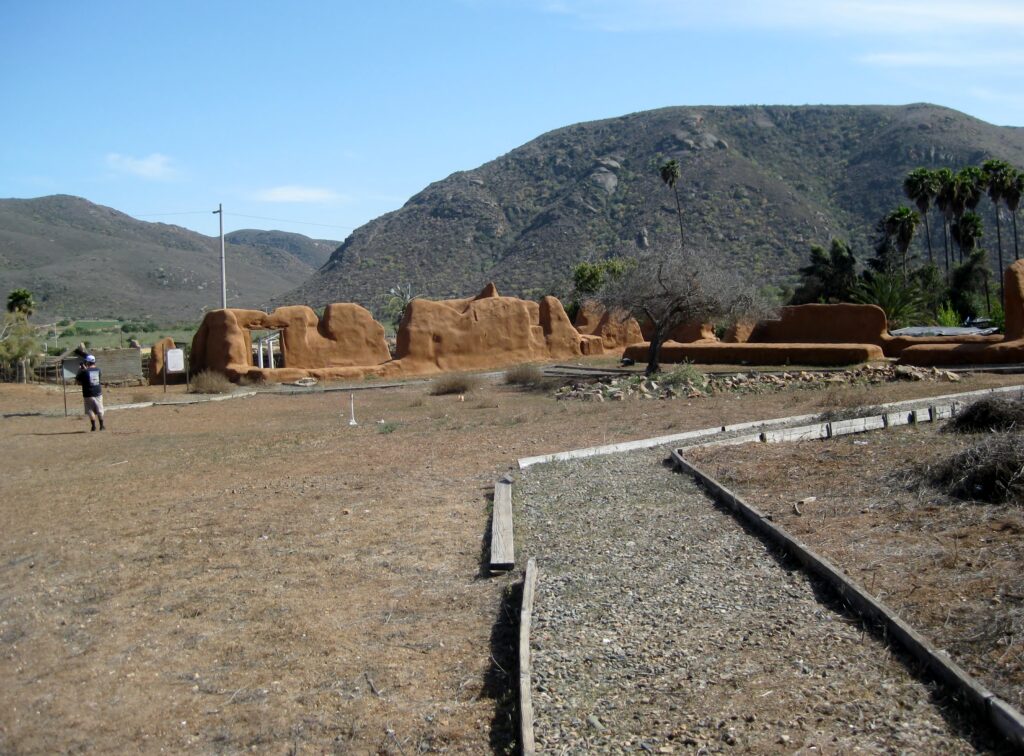
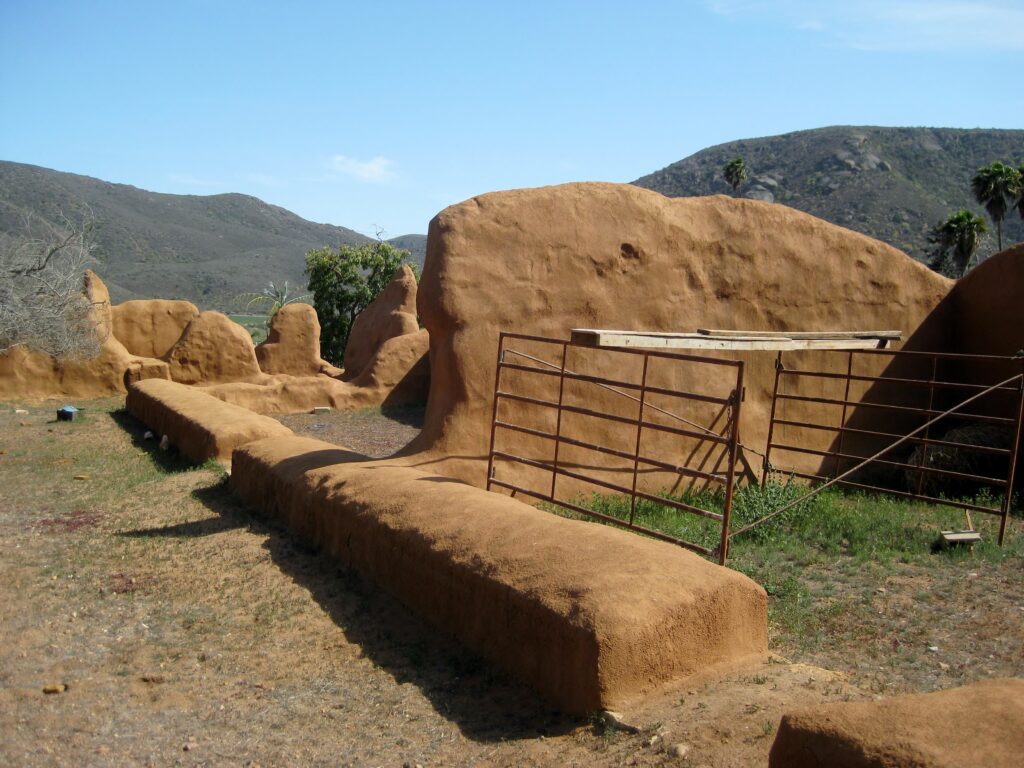
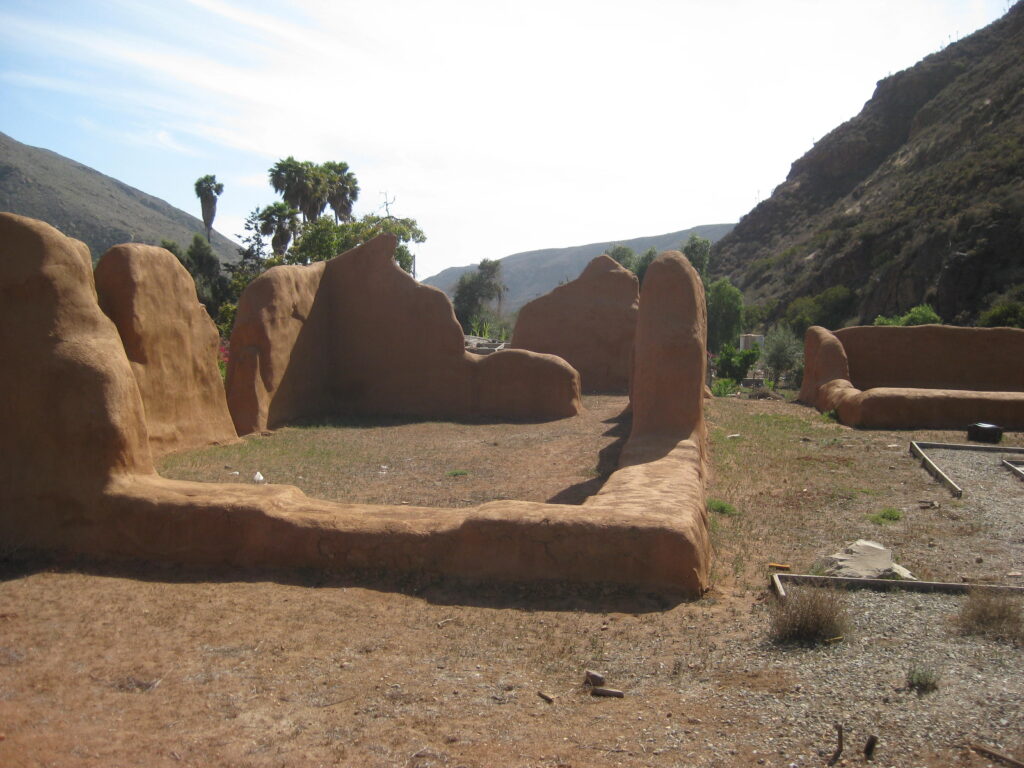
2017 photos by David Kier


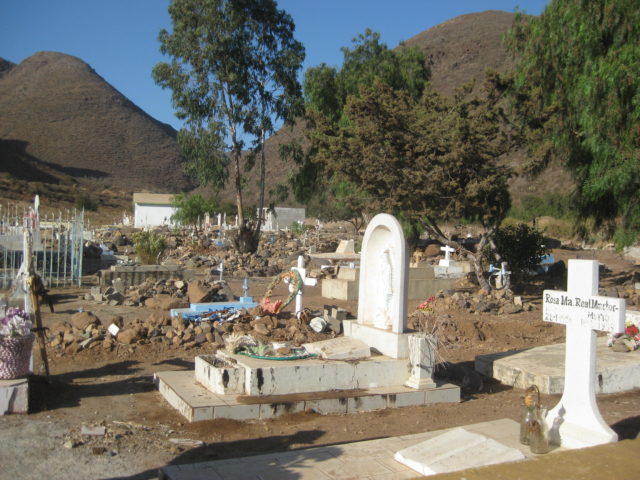

2014 photos by David Kier


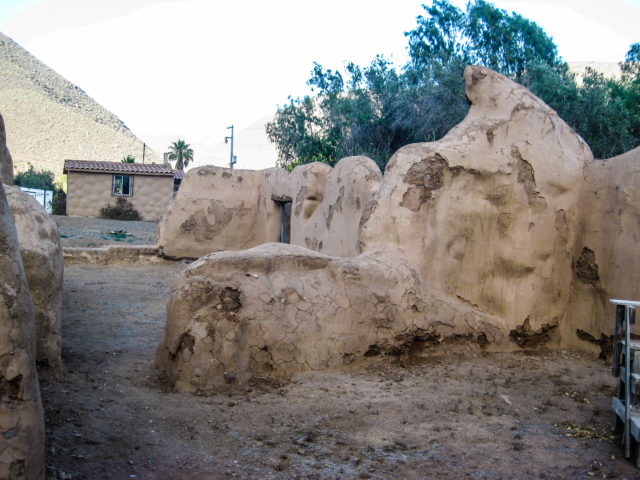


2005 photos by David Kier


2003 photo by Jack Sword

1954 Howard Gulick photo

1949 Marquis McDonald photo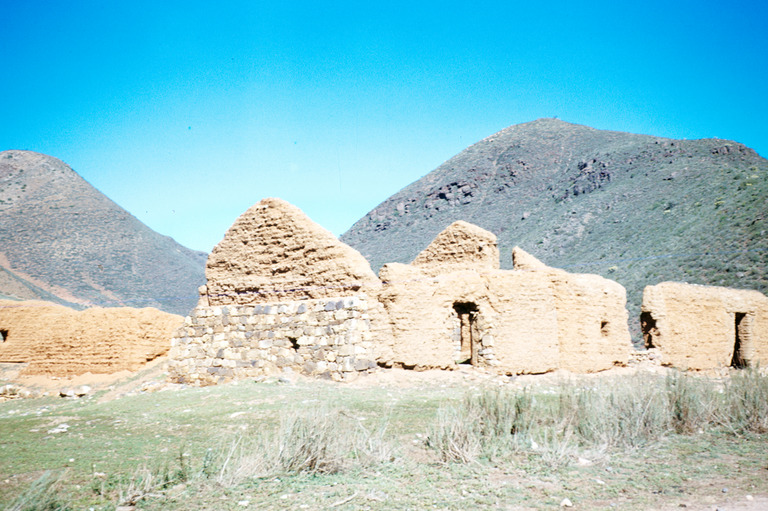
1926 Peveril Meigs photo

1894
(photo provided by David Marrón and Ensenada’s history museum)
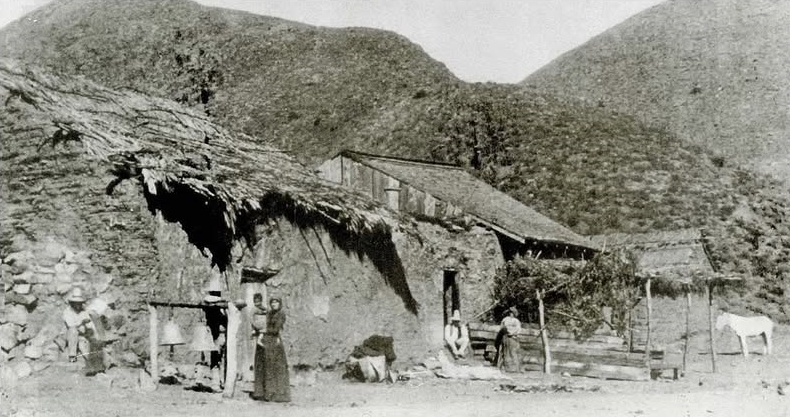
1886
(photo provided by Robert Jackson)

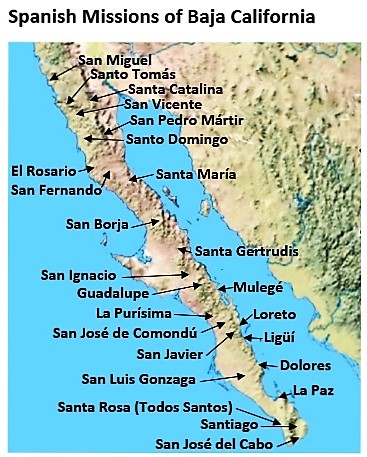
Regional Map

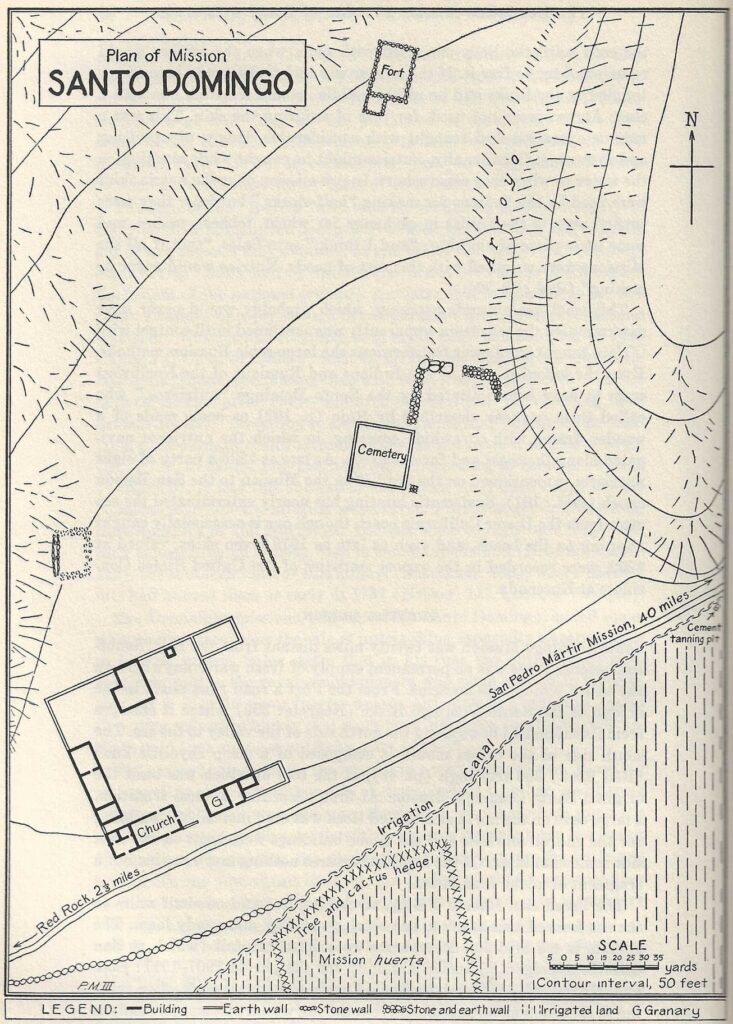
Site Plans from Peveril Meigs mid-1920s:
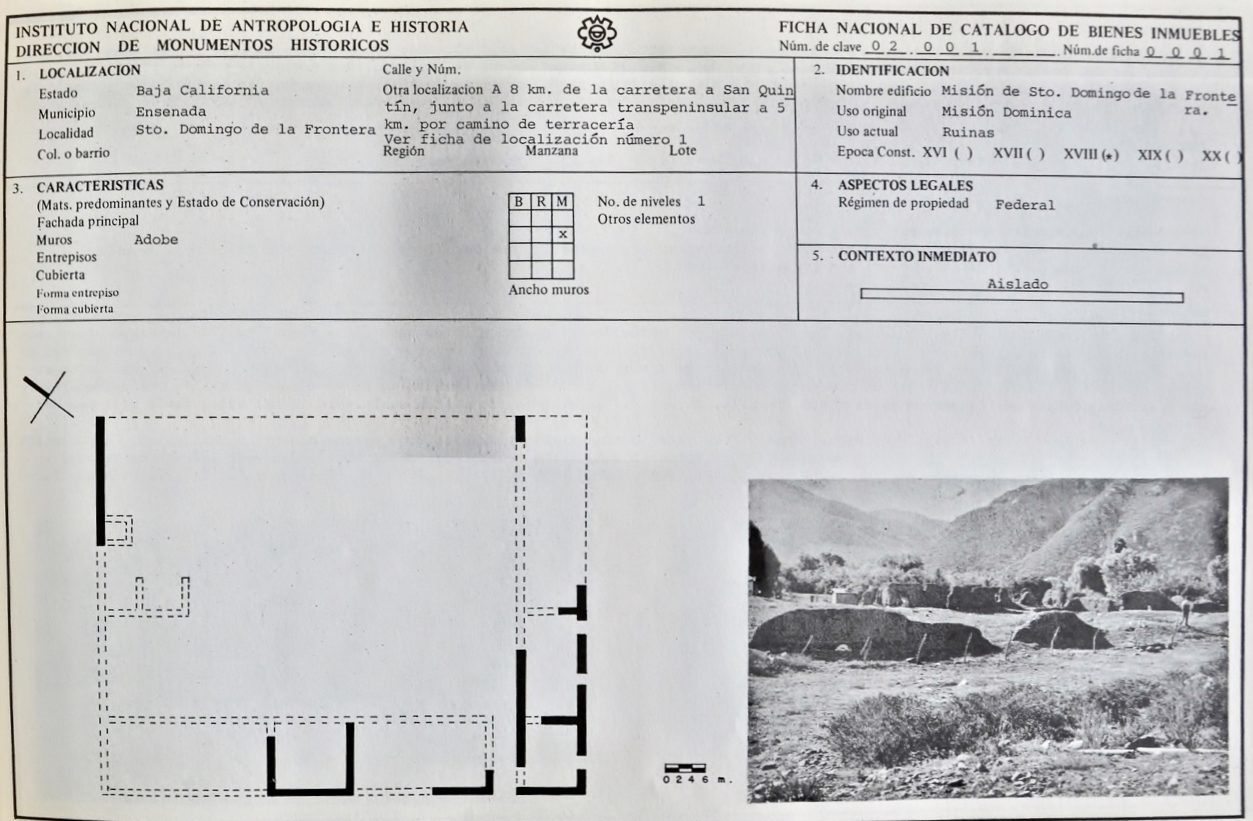
Site Plans from INAH:
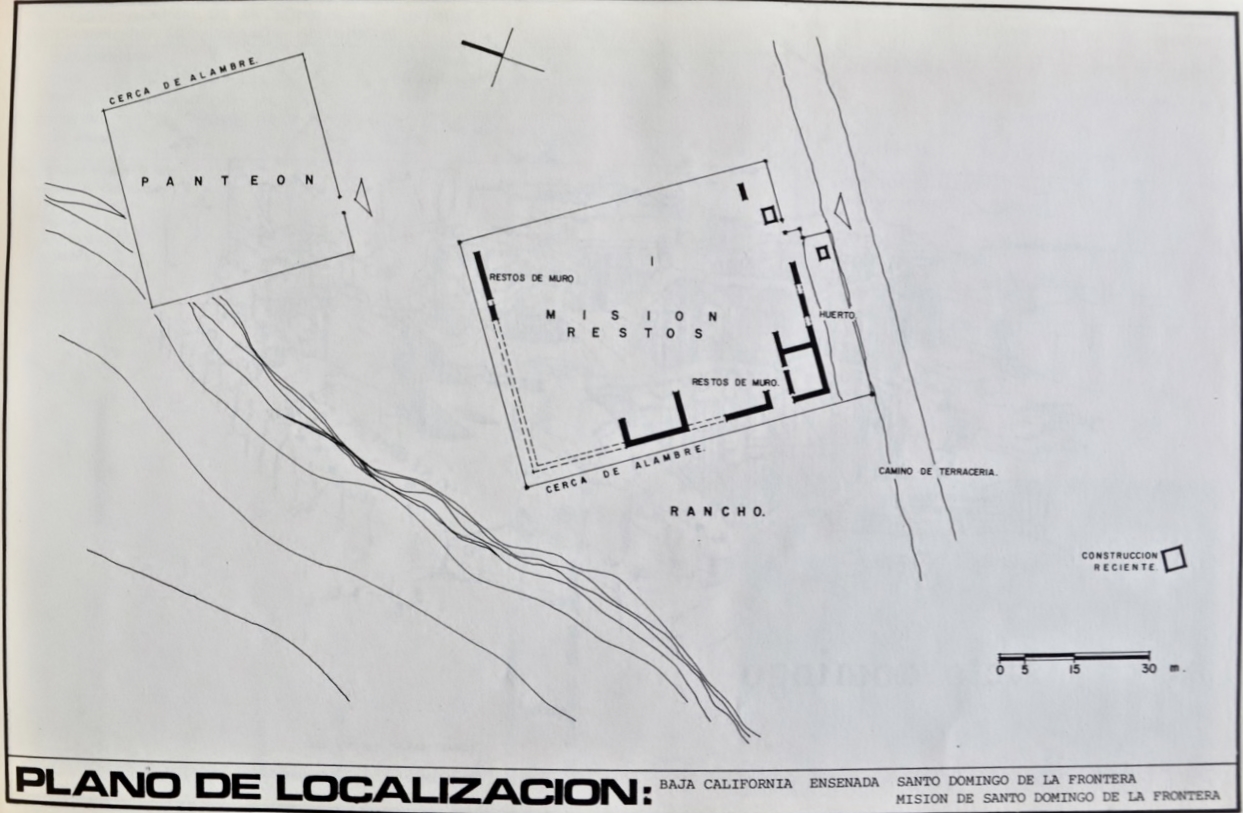
- GPS: 30.770889, -115.937222
- Directions: Highway 1( just north of Vicente Guerrero) at Km. 169+, go east 4.6 miles.
- VivaBaja.com MISSIONS SECTION: https://vivabaja.com/missions1
I hope this was interesting or informative for you! Please be welcome to join our Baja California Land of Missions Book Group, on Facebook: HERE
- All the missions, quick look and history, north to south: HERE
- Other mission photo pages plus more Baja California history: HERE
- VivaBaja.com home page
The following chapter is from my book, Baja California Land of Missions Order your own copy from Amazon Books: HERE
#20 Santo Domingo (1775-1822)
One year following the founding of their first mission at El Rosario, the Dominicans were ready to establish the second mission of their California service. Padre Manuel García and Padre Miguel Hidalgo traveled twenty leagues (about fifty miles) north to a site where a large arroyo emerged from the mountains. This was on or about August 30, 1775, and they named the new mission Santo Domingo. The first services were held in a cave at the base of a large red rock on the south side of the arroyo. The mission church was soon constructed near the cave.
Padre García was at Santo Domingo until late 1776, when he was succeeded by Padre José Aivár, who served until the end of 1791. Other Dominicans performed functions at Santo Domingo during his time as resident priest. One was Padre Luis Sáles, who performed baptisms here in 1778 and 1779. Sáles wrote that the Indians of Santo Domingo (and San Vicente further north) were “unquiet, subversive, and inclined to revolt.” A terrible smallpox epidemic killed a third of the population in 1781.
In 1782, the mission’s neophyte population was only seventy-nine. Getting Indians to live at Santo Domingo was more difficult than at other missions, where food offered by the missionaries had bribed them away from their native homes. The problem for this mission location was that most of the Indians lived along the coast or on San Quintín Bay twenty miles away and the sea provided for their subsistence. The mission’s agricultural program required quantities of fresh water to grow crops and raise livestock. Fresh water was typically found in the hills but not along the seashore. Salt flats near the bay provided for the salt needs of this and the other northern Dominican missions.
The next resident missionary was Padre Miguel Abád who was stationed here from January 1792 to September 1804. In 1793, the church was constructed using adobe and poles. It measured approximately twenty-two by fifty feet. In 1798, a large chapel with additional rooms and a kitchen was constructed two and a half miles to the east, where the twenty-three-year-old mission was moved. This placed the mission closer to a better water supply.
By 1799, a cattle ranch outpost was established at San Telmo, about sixteen miles north. Construction of additional buildings continued at both Santo Domingo and San Telmo. San Telmo was an important visita of Santo Domingo and has been populated continually since mission times. By 1800, the neophyte population at Santo Domingo had increased to 315.
Padre José Miguel de Pineda was next in charge at Santo Domingo making entries in the mission books until August 24, 1809. Very few baptisms appear in the books beyond 1809 and it is uncertain if a resident priest was even living at Santo Domingo after 1821. Sea otters, sold to the Russians, were an important source of mission revenue, along with sales of salt. These activities were necessary during the period of isolation while Mexico and Spain were at war and the padres needed supplies.
Large gaps in recording events began after 1822. The next entries in the mission books were made in 1827 and 1828. The population was down to seventy-eight in 1830. The final entries made in the mission book began again in 1832 and were made each year to 1836, then again in 1838. The final baptism was on March 18, 1839.
An interesting story comes from the pen of an editor of Desert Magazine, the late Choral Pepper:
“In the late 1920s the buildings were still intact with embroidered altar cloths, carved wooden saints, and bells hanging from a crossbar in front of the mission. The faithful then had a superstition that so long as the bells hung in their rightful place, peace and health would dwell in the pueblo. Then one night in 1930, the bells were stolen. Immediately several older residents dropped dead. After that, the mission fell into ruin and its altarpieces disappeared.
“While editor of Desert Magazine, I was told a story by a reliable reader that might explain the disappearance of the wooden saints. On a visit to Santo Domingo, she had personally examined four carved wooden mission figures, each about three feet high and so heavy that it required the efforts of several strong men to lift them. She was told that the mission’s last priest had left the saints in the care of a local farmer. Responsibility for their safekeeping had been passed from one surviving senior member of the community to the next eldest upon the death of each in turn. Originally there had been five figures, she was told, but one had been loaned to a neighboring village for a festival and never returned. At that time, they resided in a shed at the rear of a farmhouse near the mission.
“An early traveler who discovered gold dust clinging to their hollowed insides reportedly found a different set of figures, similar except in size.”
To reach Santo Domingo, take a graded dirt road east for 4.6 miles from Km 169 on Highway One, just north of the Santo Domingo River crossing.
Dominican Missionaries recorded at Santo Domingo:
Manuel García (to 1776) August 30, 1775
Miguel Hidalgo 1775 and 1777-1780
José Aivár 1775-1792
Domingo Ginés 1778
Luis Sáles 1778-1779
José Díez Bustamante 1780
Manuel Pérez 1781
José Estévez 1782-1785 and 1788
Juan Antonio Formoso 1785-1787
Jórge Cóello 1789
Miguel Abád 1791-1804
Tomás Valdellón 1793-1801
Tomás Cavallero 1794
Jáime Codina 1794-1797
Miguel López 1795
Mariano Yóldi 1796
Juan Ríbas 1799
José Caulas 1799-1803
Antonio Lázaro 1800
José Miguel de Pineda 1804-1809
Manuel de Águila 1807
Ramón de Santos 1809
Bernardo Solá 1809-1811
Róque Varela 1811-1812
José Duro 1812-1819
Domingo Luna 1819-1822 (last resident missionary)
Francisco Troncoso 1821
Antonio Menéndez 1822-1825 (from San Vicente)
Félix Caballero 1822, 1827, 1829, and 1832-1834 (from San Miguel)
Tomás Mansilla 1829-1850 (from Santo Tomás)
See the other mission pages: https://vivabaja.com/baja-mission-albums/