Full name: Santa Rosa de las Palmas
Founding date: August 1733 Mission #13
Catholic Order: Jesuit
Founded by: Padre Sigusmundo Taraval
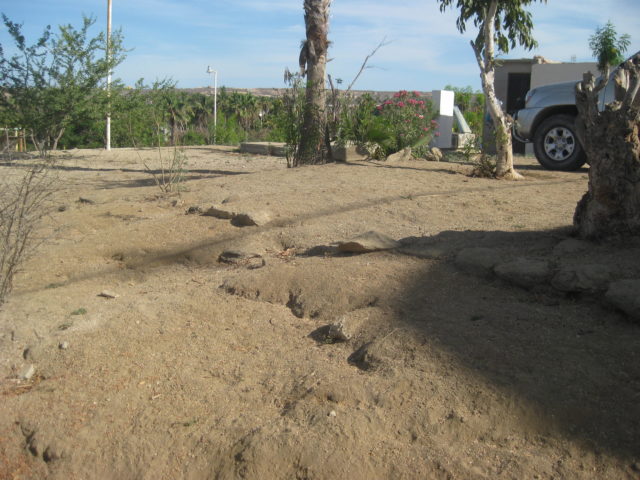
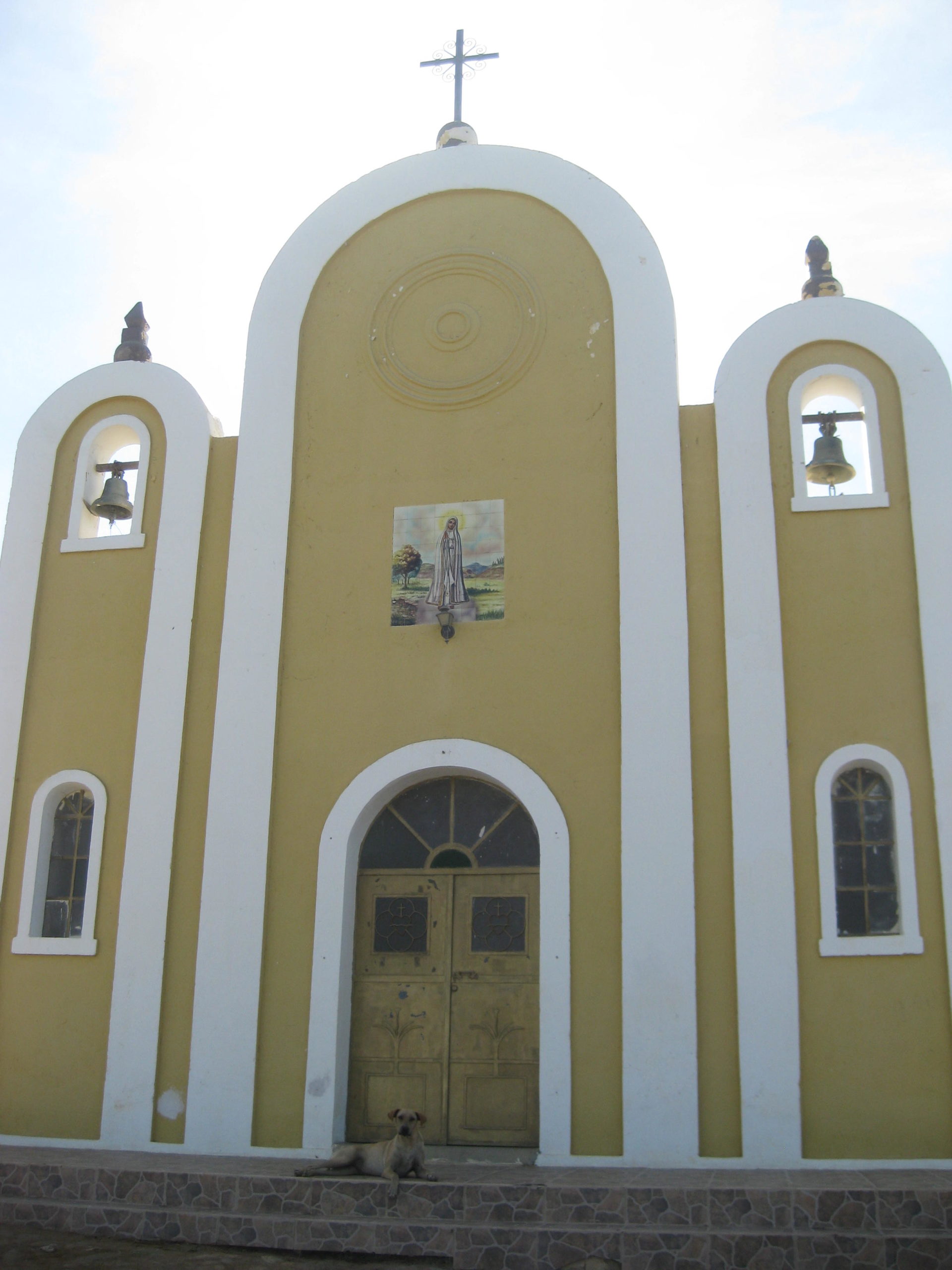
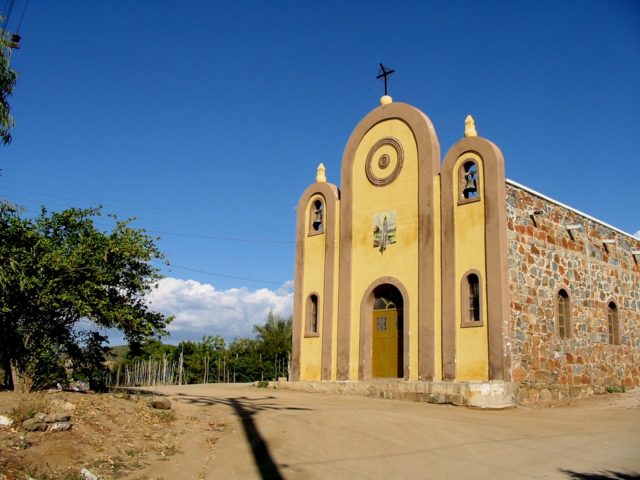
Condition: No ruins remain. Modern church and playground on the site, along Highway 19.
Closing date: Mission Santa Rosa was terminated in 1748 when the older mission at La Paz relocated to here.
GPS: 23.460316, -110.219140
Access: Mex. #19 Km. 49.5 (north edge of Todos Santos)
Todos Santos was originally the name of the Pilar de la Paz mission visita, established around 1725. It was very successful and in 1733 became Mission Santa Rosa de las Palmas. In 1748, the mission at La Paz moved south to it, and replaced Mission Santa Rosa. No native name was recorded for Todos Santos.
Photos for Santa Rosa are the same ones for the second Pilar de la Paz mission location:
2017 photos by David Kier


2003 photos by Jack Swords

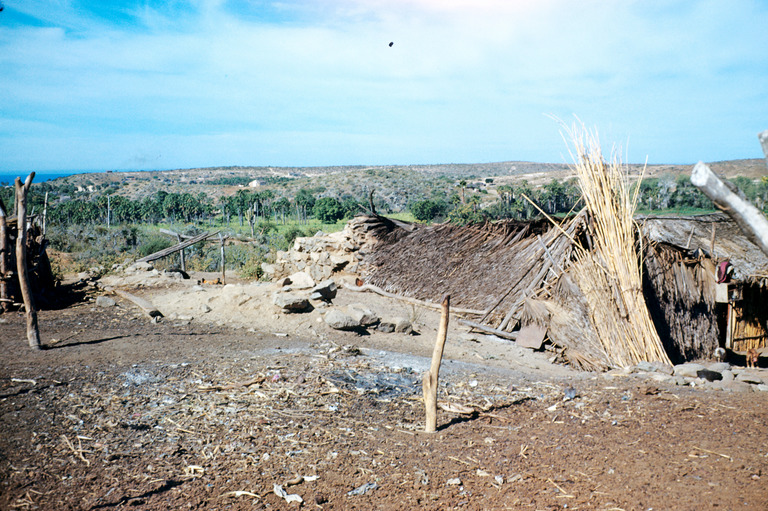
1950 photo by Marquis McDonald
Maps
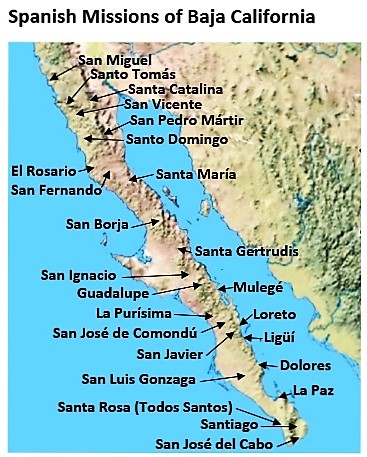

I hope this was interesting or informative for you! Please be welcome to join our Baja California Land of Missions Book Group, on Facebook: HERE
- All the missions, quick look and history, north to south: HERE
- Other mission photo pages plus more Baja California history: HERE
- VivaBaja.com home page

The following chapter is from my book, Baja California Land of Missions Order your own copy from Amazon Books: HERE
#13 Santa Rosa de las Palmas (1733-1748)
In 1724, Padre Jaime Bravo of the mission at La Paz became aware of the ranchería of Uchití natives (a Guaycura Indian group) some fifty miles to the south and two miles from the Pacific Ocean. Padre Bravo found the location excellent to farm and become a potential visita of his mission, Pilar de la Paz. Neophytes from Jesuit missions in Sinaloa were sent over to clear the land for growing. Bravo named this visita “Todos Santos” (no local native name was recorded).
By 1731, Todos Santos had become an important producer of food. When its own natives were nearly gone due to epidemics or fighting with other Indian groups, some families of Pericú Indians living further south were brought in. In 1732, the Jesuits decided to establish a separate mission at Todos Santos just as soon as funds and a priest were available.
An endowment came from Doña Rosa de la Peña, the Marquesa de las Torres (sister-in-law of the Marqués de Villapuente) to establish a new mission. It was to be named Santa Rosa in her honor. Padre Sigismundo Taraval was the founding Jesuit, opening the mission in August 1733. The visita name “Todos Santos” was the name typically used to describe the site, even after it became the Mission of Santa Rosa de las Palmas.
Some confusion on the location of Mission Santa Rosa appears on old maps and in letters, describing the mission as being on the Bay of Las Palmas, which is on the opposite coast of the peninsula. A visita named “Santa Rosa” belonging to and just north of San José del Cabo likely contributed to the confusion.
Mission Santa Rosa was open barely a year when the Pericú Revolt broke out in October 1734. Padre Taraval was practically dragged away by the soldiers attending him when word came that his Jesuit brothers in Santiago and San José del Cabo had been murdered. Taraval had good Indian relationships and thought he could pacify the rebels if he was allowed to remain. The four southernmost missions were destroyed. Taraval would later learn that the rebels killed forty-nine women and children at his mission.
Jesuits began to return to the southern missions after more than two years of fighting between Spanish soldiers and Indian rebels. As a result of the revolt, Spanish soldiers were permanently based in the south with ten each at La Paz, Santiago, and San José del Cabo.
In 1745, King Philip V ordered an increase in the number of settlements in California coupled with a desire to expand northward.
By 1748, it was decided that the missions of the south could be consolidated from four to two. First, by closing the mission at La Paz Bay and moving it south to take over functions at Todos Santos and also closing the mission of San José del Cabo. The Escuadra del Sur (a sub-presidio of Spanish soldiers) was also moved to Todos Santos from San José del Cabo.
In 1748, the Mission of Pilar de la Paz relocated to Todos Santos and the mission enterprise there, named Santa Rosa de las Palmas, came to an end. While the mission name was changed to Nuestra Señora del Pilar de la Paz, the location and mission typically continued to be called Todos Santos. In 1825, the Pilar de la Paz mission moved a second time, one-mile south to where the church now is, in the town plaza.
One visita of the mission was named San Jacinto and is about fifteen miles to the southeast. Adobe ruins survived into the twenty-first century at San Jacinto.
The original Todos Santos mission site has become a playground along Highway 19, in front of a church that was built in 1970. See also the chapter on Mission #7, Pilar de la Paz, page 57.
Jesuit Missionaries recorded at Santa Rosa:
Sigusmundo Taraval 1733-1734
(Vacant 1734-1736)
Bernhard Zumziel 1737-1748
See the other mission pages: https://vivabaja.com/mission-albums/