Full name: Nuestra Señora de Loreto Conchó
Founding date: October 25, 1697 Mission #1 of 27
Catholic Order: Jesuit
Founded by: Padre Juan María de Salvatierra
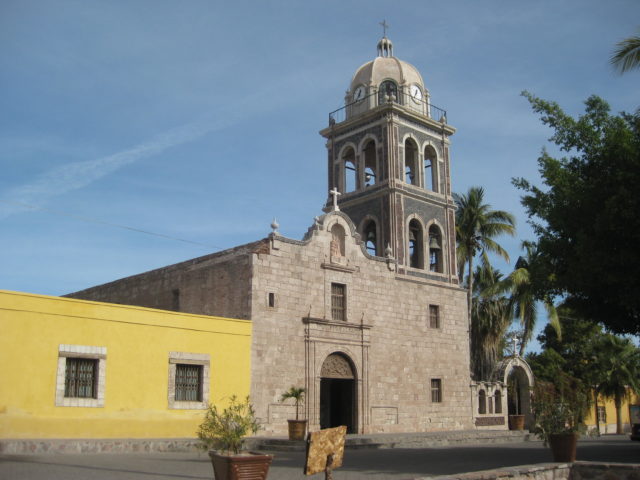
Condition: Stone church constructed from 1740 to about 1750. New roof and bell tower added in 1955.
Closing date: Closed in 1829.
GPS: 26.010278, -111.343278
Access: Mex. #1 Km. 0 (Loreto) east 2 kms.
Read more: HERE
Feb. 2017 photos by David Kier


July 2009 photos by David Kier

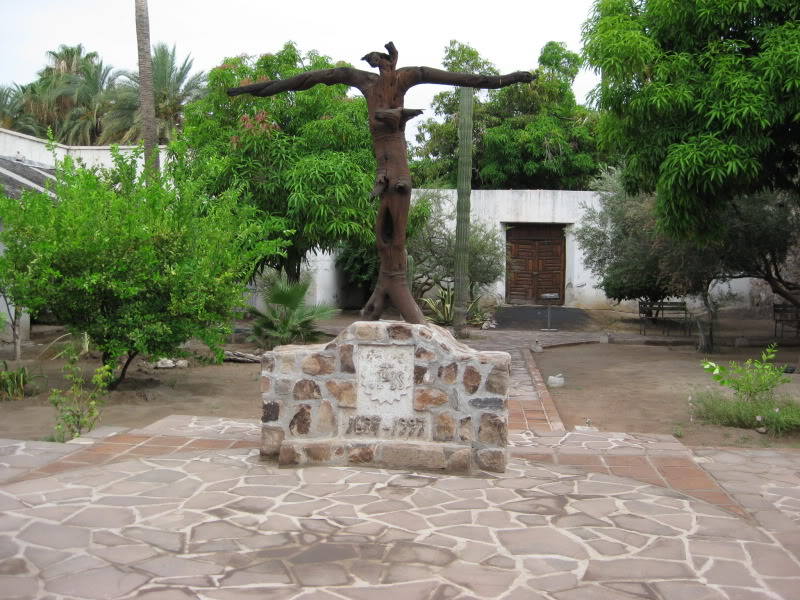
March 2001 photos by Jack Swords


1960s photos by Erle Stanley Gardner
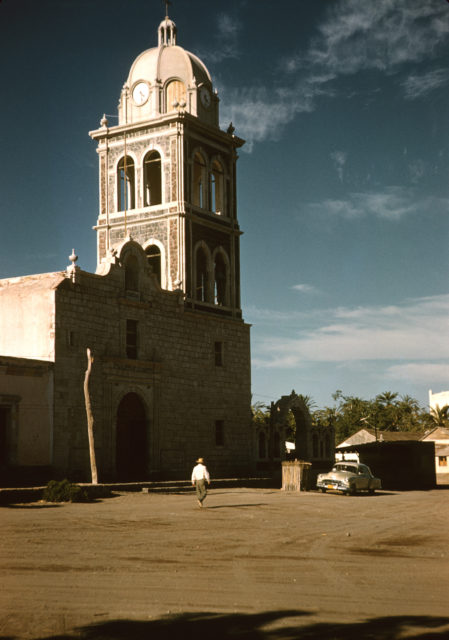
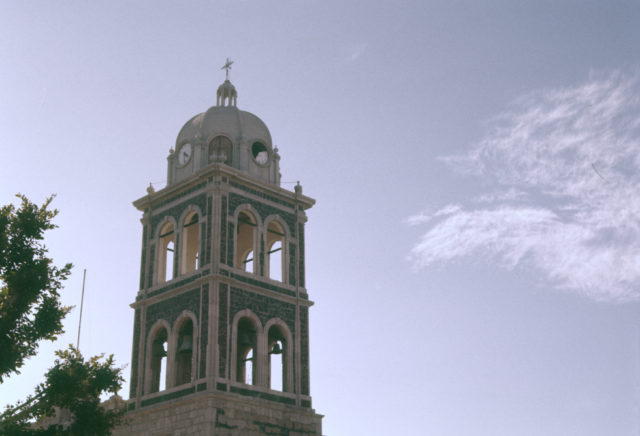
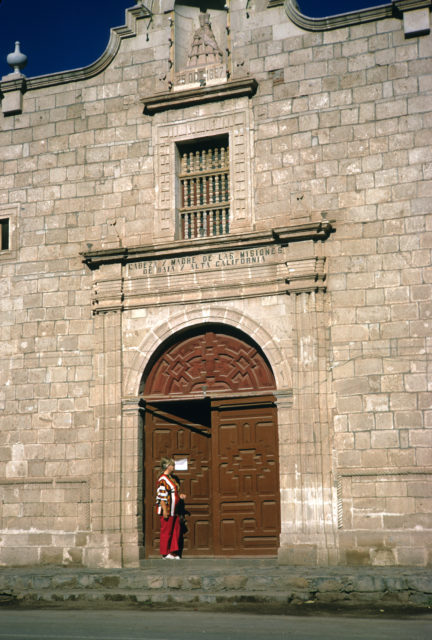
April 1957 photos by Howard Gulick


1950 photos by Howard Gulick


1950 photos by Marquis McDonald


1906 photos by Arthur North


Loreto mission as it was in the late 1700s to early 1800s in an illustration by Rivera Cambas, 1960.

Maps and Plans


I hope this was interesting or informative for you! Please be welcome to join our Baja California Land of Missions Book Group, on Facebook: HERE
- All the missions, quick look and history, north to south: HERE
- Other mission photo pages plus more Baja California history: HERE
- VivaBaja.com home page

The following chapter is from my book, Baja California Land of Missions
Order your own copy from Amazon Books: HERE
#1 Nuestra Señora de Loreto Conchó (1697-1829)
On October 19, 1697, Padre Juan María de Salvatierra with the financial contribution of Juan Caballero, founded the mission of Loreto at the native Indian ranchería of Conchó. The mission began as a simple structure inside the presidio (fort) until the natives accepted the Spanish on their land. The mission did not begin without incident. On November 13, 1697, the natives had decided not to only accept the gifts of food that followed the religious instruction but also to attack the mission and take it all. Arrows and rocks struck the compound and attack came from all sides, Salvatierra wrote. The Spanish soldiers were successful in defending their presidio and saving the mission. The chief came forward and offered peace with the Spaniards shortly after sunset.
In 1699 construction on a larger, adobe church was started outside the presidio and this was completed on September 8, 1704. New missions would be built out from Loreto on a road network that would become known as El Camino Real, securing the land for the King of Spain. Forty-eight missions would eventually be established in both Lower and Upper California over the next 137 years.
In 1740, Padre Jaime Bravo began construction on a larger church built of stone and mortar whose walls survive to this day. The importance of Loreto as the capital of California would continue into the next century. The Jesuits would not be so enduring.
Two important visitas of Loreto were San Juan Londó and San Ignacio (not the same location as the future mission named San Ignacio). Londó was thought by some to be a mission because of its chapel’s size and elaborate stone construction.
All sixteen California Jesuits were ordered expelled from the peninsula in 1767 by a Royal Decree which was personally read to the assembled Jesuits on December 26 by newly appointed Governor Gaspar de Portolá. The Jesuits boarded a ship at Loreto on February 3, 1768, and two days later began the long journey back to Europe, joining along the way with their Jesuit brothers who were also expelled from other parts of the New World.
On Good Friday, April 1, 1768, the Franciscan friars, led by Junípero Serra, landed at Loreto, and began the operation of the missions. In a year, Serra would lead an expedition north into unexplored lands to establish missions at San Diego and Monterey. The Franciscans became incredibly involved in the new territory from San Diego north. They agreed to share California mission duties with the Dominican Order of Preachers. A boundary line was marked dividing the Franciscan and Dominican jurisdictions on August 20, 1773, by Padre Francisco Palóu at Médano Valley about twenty-six miles south of today’s international border.
In May 1773, the Dominicans replaced the Franciscans at all peninsula (Baja) California missions. In addition, they were given the unconverted land to establish new missions of their own and fill the void along El Camino Real between San Fernando de Velicatá and San Diego.
The line between Franciscan and Dominican zones was moved north in 1788 about ten miles to Arroyo del Rosarito by Padre Luis Sáles and remained the dividing point between Baja California and Alta California until the end of the war with the United States in 1848, when it was moved north one final time, about sixteen miles.
On March 26, 1804, California was officially divided into two political regions of Baja California and Alta California each with a governor. Forty-three of the forty-eight missions had been founded in California before that date. By the end of the mission period the Jesuits had founded the first seventeen missions, the Franciscans founded twenty-two, and the Dominicans founded nine. In all, twenty-seven missions were in Baja California and twenty-one in Alta California.
The Loreto mission was so damaged by floods from a hurricane in 1829 that it was closed, and the capital of Baja California was eventually relocated to La Paz. The bell tower was later destroyed in the earthquake of 1877. A modern bell tower was added at Loreto in 1955, however it does not match the style or scale of the original.
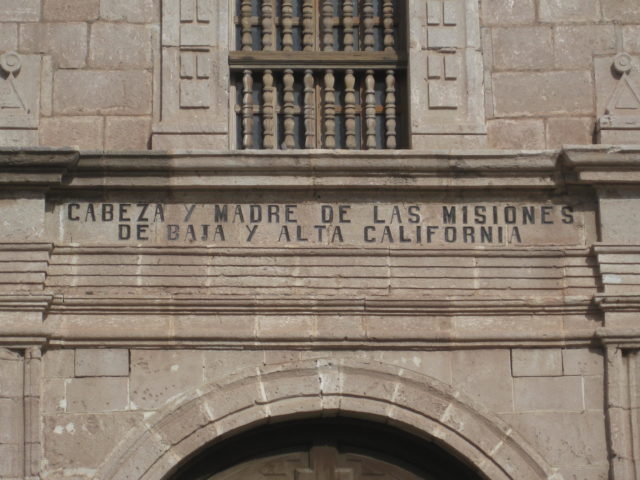
The Loreto mission and museum are a highlight of any visit to Loreto, and its importance is inscribed over the doorway, which reads: Cabeza y Madre de Las Misiones de Baja y Alta California (Head and Mother of the Missions of Lower and Upper California).
The lists of missionaries provided for each mission may include visiting missionaries in addition to those assigned to a mission. Records are incomplete so missionaries may have been active additional years outside the ones shown. Gaps in the list indicate the data was lost or missing and give mission history researchers additional purpose. It is this author’s hope that more names and years can be added to future editions of this book.
Missionaries recorded at Loreto:
Jesuit
Juan Salvatierra 1697-1704 and 1707-1717
Francisco Píccolo 1697-1699 and 1718-1729
Juan de Ugarte 1701
Jerónimo Minutili 1702-1703
Pedro de Ugarte 1704
Jaime Bravo 1705-1720 and 1728-1744
Julián Mayorga 1707
Clemente Guillén 1718 and 1748
Juan Mugazábal 1720-1761
Gaspar Trujillo 1744-1748
Juan Armésto 1747-1752
Johann Bischoff 1753-1757
Francisco López 1755-1762
Lucas Ventura 1757-1768
Julián Salazar 1758 and 1763-1765
Ignacio Tirsch 1762-1763
Juan Villavieja 1765-1768
Francisco Franco 1767-1768
Franciscan
Junípero Serra and Fernando Parron April 5, 1768
Juan Ramos de Lora 1769-1772
José Murguía 1770
Vicente Santa María 1771-1772
Fernando Parron 1772
Dominican
Vicente Mora (to 1800) and Martín Zavaleta May 15, 1773
Nicolás Muñóz 1779
Francisco Galistéo 1779-1789
Miguel Hidalgo 1781
José Armésto 1790
Antonio Berraguerro 1793
José Herrera 1793-1794
Caietano Pallás 1794-1798
Pedro de Acebedo 1795
Miguel Gallégo 1795 and 1810
Pablo María de Zárate 1796
Plácido Sanz 1798, 1804
Vicente Belda 1798-1802
Rafaél Arviña 1802-1804
Antonio Lázaro 1806
Ramón López 1812-1816
See the other mission pages: https://vivabaja.com/baja-mission-albums/