Full name: Nuestra Señora de Guadalupe
Founding date: July 25, 1834 Mission #27
Catholic Order: Dominican
Founded by: Padre Felix Caballero (after Mexico’s independence from Spain)
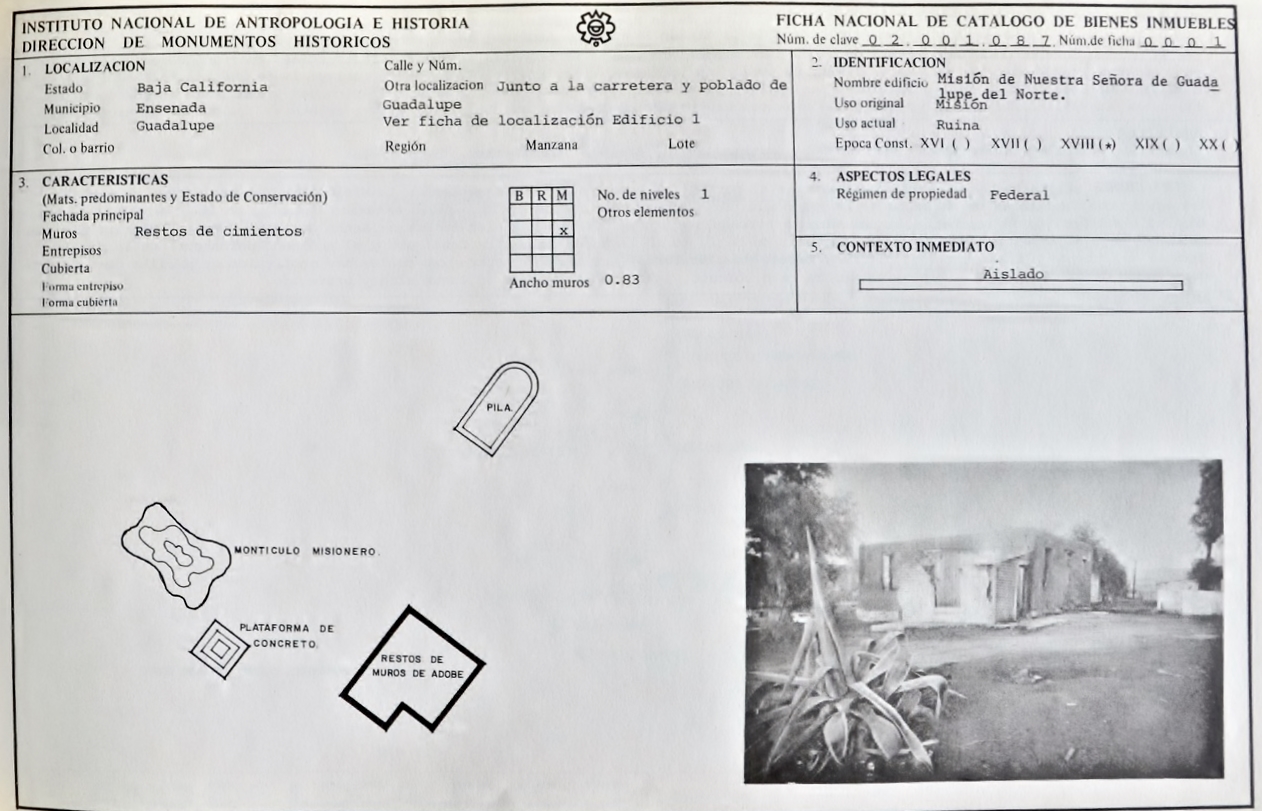
Condition: No remains. Footings added at site in 1998 to simulate mission.
Closing date: Abandoned in 1840.
GPS: 32.091944, -116.574250
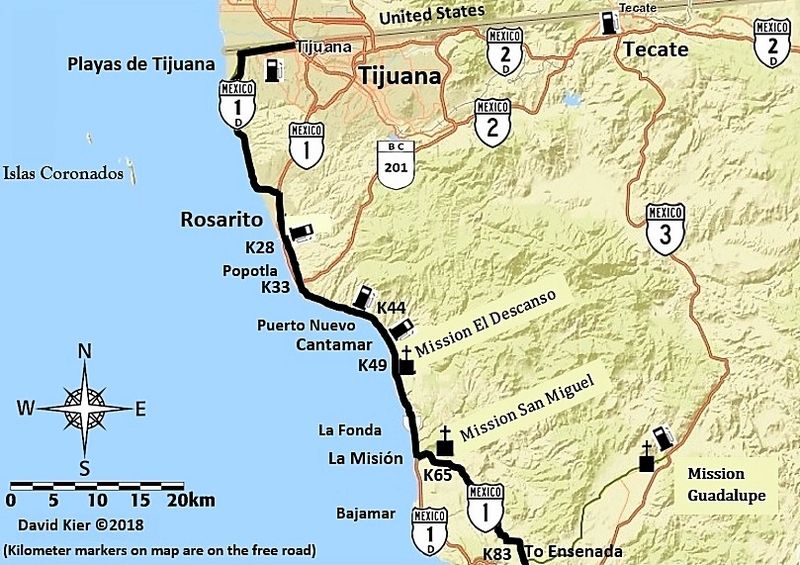
Access: Mex. #3, Km. 77. To find the mission, take the paved road going into town, at the gas station for Guadalupe (Francisco Zarco). Go 1 mile to a cross street. Ahead the road is divided, turn left to the mission museum, passing a school.
Read more: HERE
June 2017 by David Kier
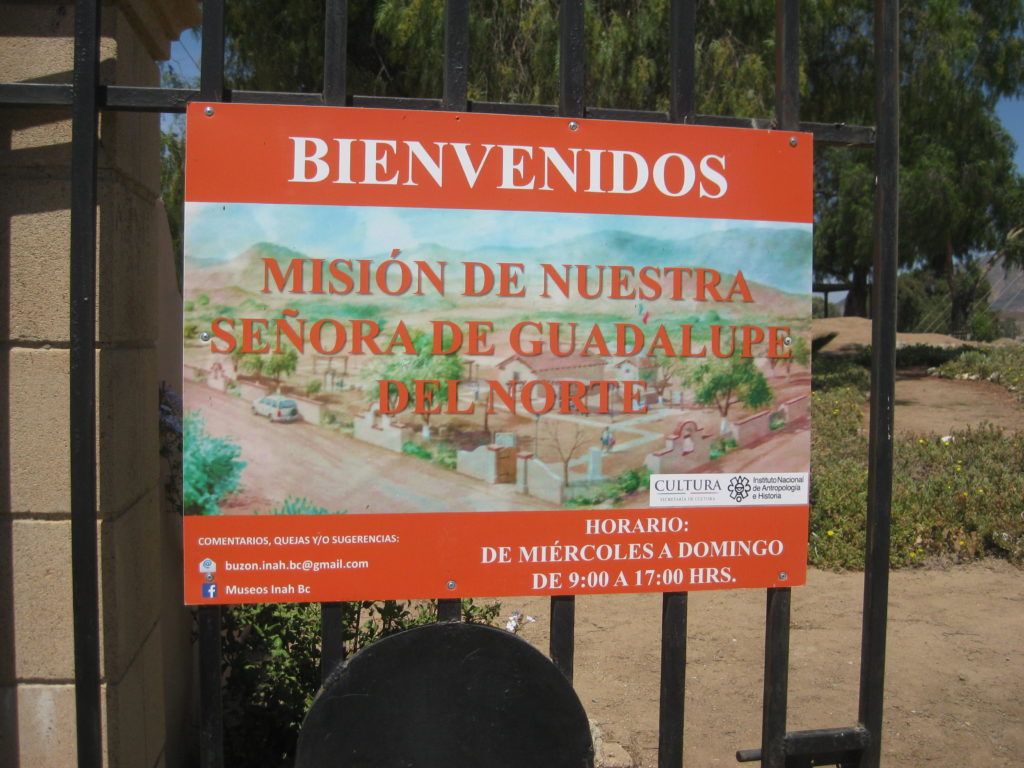

October 2012 photos by David Kier:


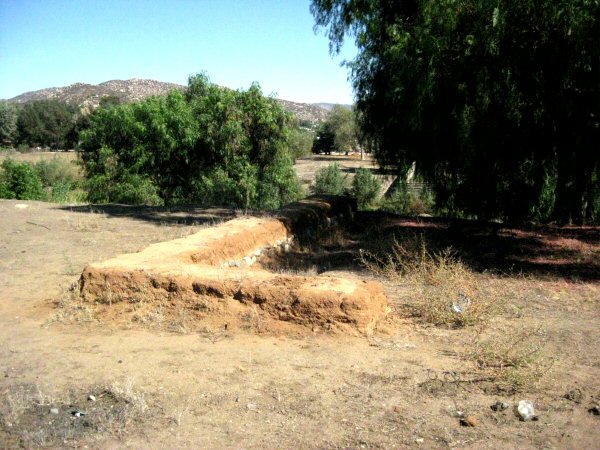


2001 Photos at the mission compound by David Kier


1955 Photo by Howard Gulick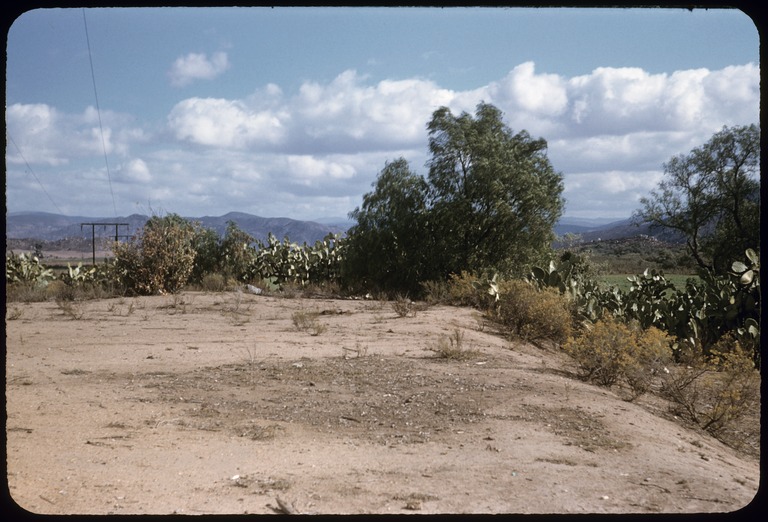
1949 Photo by Marquis McDonald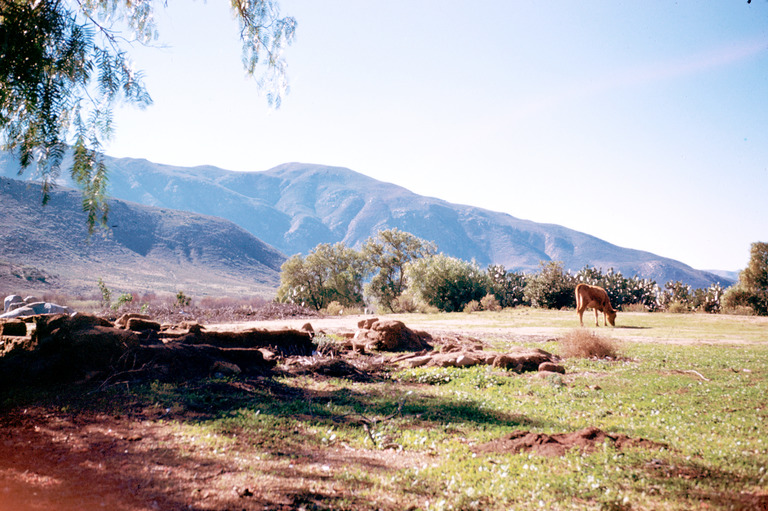
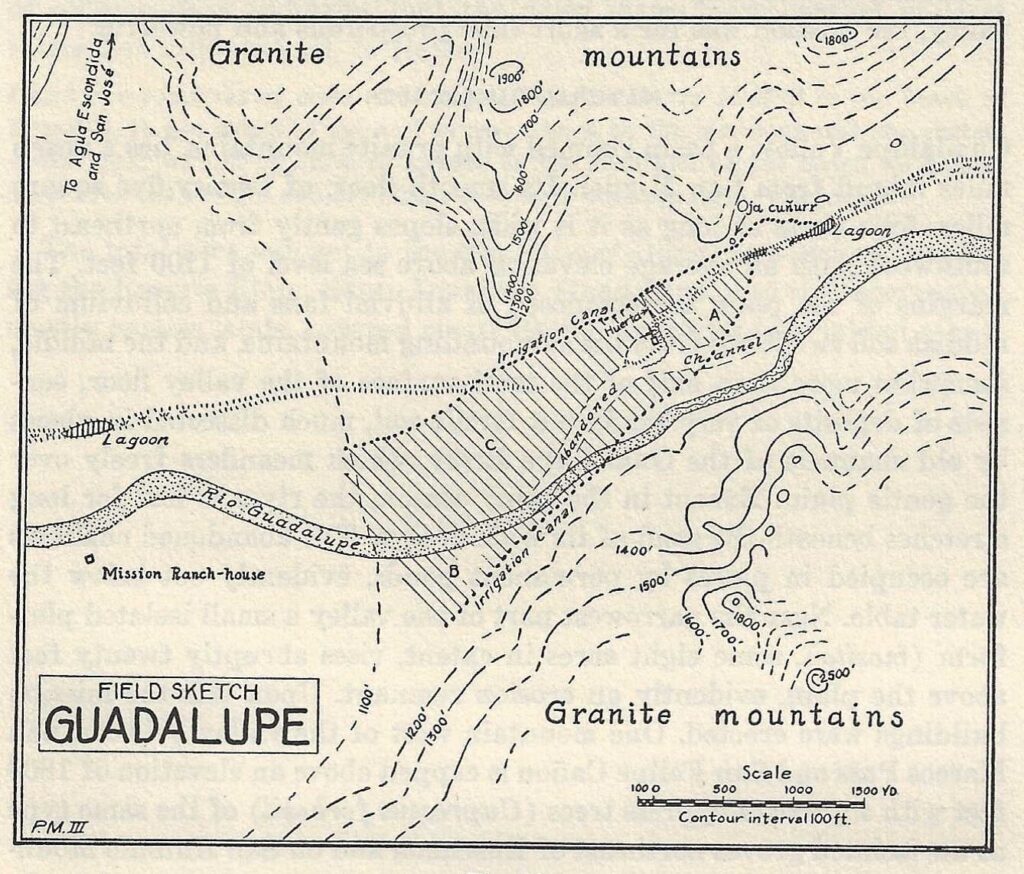
1929 site map by Peveril Meigs
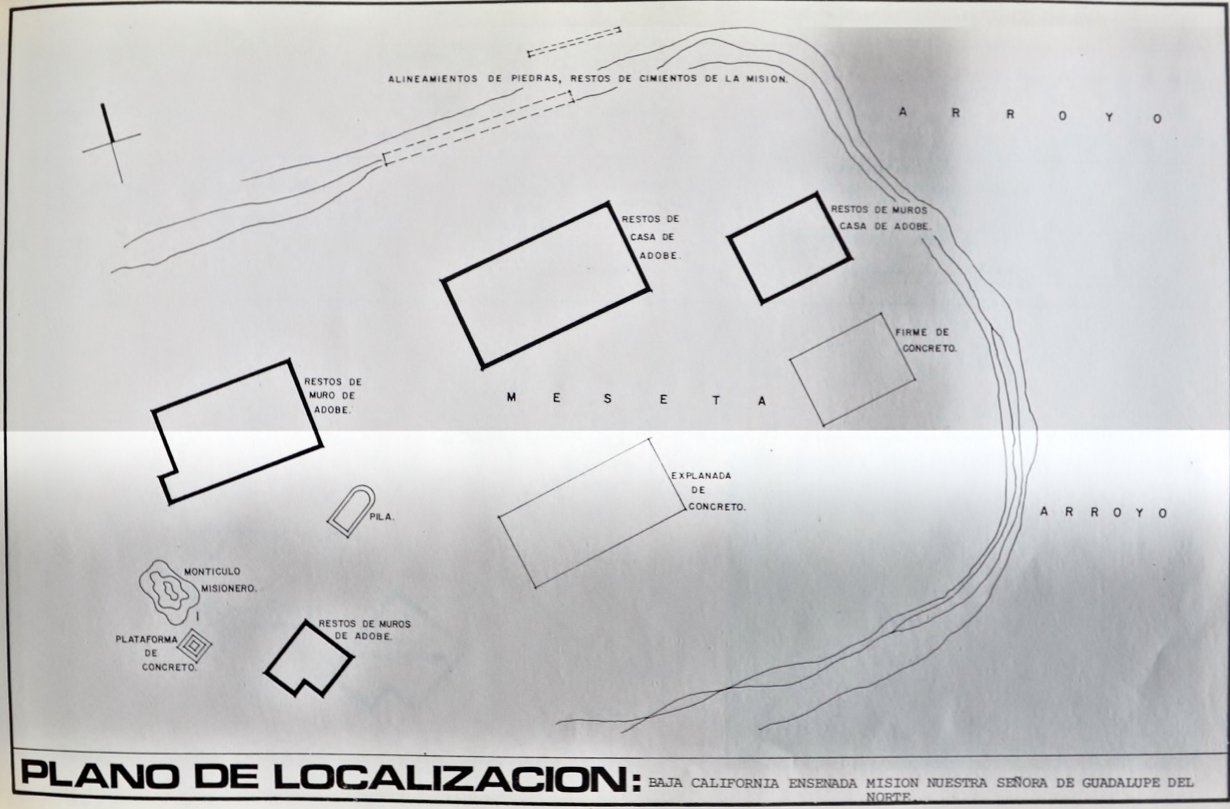
Site plans from INAH https://www.inah.gob.mx/
Regional Map
I hope this was interesting or informative for you! Please be welcome to join our Baja California Land of Missions Book Group, on Facebook: HERE
- All the missions, quick look and history, north to south: HERE
- Other mission photo pages plus more Baja California history: HERE
- VivaBaja.com home page

The following chapter is from my book, Baja California Land of Missions Order your own copy from Amazon Books: HERE
#27 Nuestra Señora de Guadalupe (1834-1840)
Ojá Coñúrr (Painted Rock) was the native Indian name for the location of the final mission to be established in both Baja and Alta California. Dominican Padre Félix Caballero named this new mission in honor of Mexico’s patron saint, Guadalupe. The founding date has been given as June 25, 1834. The mission is sometimes called “Guadalupe del Norte” to differentiate it from the Jesuit Mission Guadalupe (1720-1795) in southern Baja California.
Padre Caballero arrived in northern Baja California in late 1814. The records show he performed a burial service at Mission San Vicente on December 15 of that year. In May 1815, Caballero was assigned to Mission San Miguel to replace Padre Tomás Ahumada, who had been the resident missionary there since 1809. Caballero was one of just five missionaries in northern Baja California that year.
In 1819, two more Dominicans arrived in Baja California and Felix Caballero was placed in charge of Mission Santa Catalina from 1819 to 1822. Major events transpired in 1822 for the people of Baja California. They learned that Spain had lost Mexico after eleven years of war and they were to pledge their allegiance to the new Mexican Empire. Also, in 1822, Chilean ships and soldiers, led by English Admiral Thomas Cochrane, attacked San José del Cabo, Todos Santos, and Loreto in an attempted invasion.
Mexico’s new emperor, Agustín de Iturbide, was soon banished by General Santa Anna, and the young country became a republic. The California missions would continue to operate without any government assistance, as they had done for several years during the war. The few remaining mission padres had to survive on what they could raise or from trading goods with foreigners. Padre Caballero was able to succeed at Mission El Descanso, which he re-founded in 1830. Some potentially rich farmlands were just southeast in a valley called San Marcos. Caballero was anxious to develop the valley. Chief Jatiñil, who helped Caballero build the new church at El Descanso, also helped him construct this new mission. Jatiñil came from Nejí, in the mountains, twenty-five miles northeast.
Guadalupe, like the new church at El Descanso, was a personal project of Caballero. The Spanish mission program was over, and while Mexico ordered that the missions be secularized in 1833, the law was rescinded for the California missions in 1835. They could continue to operate and serve the Indians until each mission was abandoned or the priest of that mission died.
According to the research of Rev. Albert Nieser, O.P., Caballero built the mission for newly arriving mainland settlers, not the Indians. Chief Jatiñil provided help for Caballero every year with harvesting crops as well as constructing Caballero’s mission buildings. Jatiñil also helped Caballero in fighting other Indian tribes that attacked Mission Santa Catalina. Jatiñil’s father had told him that the land would belong to the gente de razon or “people of reason” (whites and mixed bloods), and the chief had accepted this reality.
The Guadalupe mission church had two altars and a choir loft. The mission compound had shops and a residence for the priest. Caballero made Guadalupe the administrative center of the northern peninsula missions. The mission sat on a small mesa overlooking the valley from near the center-west side. Two miles of irrigation canals were constructed down both sides of the valley. One six-acre plot, just north of the mission, was where vegetables and fruit were raised. Cattle
seemed to be the chief commodity with nearly 4,915 head reported in 1840, the largest of any Dominican mission. A letter to Caballero on May 29 of that year from Don Juan de Jesús Ozio, however, claims the count was only 1,915.
In 1836, some 400 Yuma Indians attacked Guadalupe, but the garrison of soldiers stationed there were able to save the mission. More attacks came until the final one by Caballero’s own supporter, Chief Jatiñil. He revolted against Caballero because the priest continued to force baptism of his tribe and tried to make them live at the mission. An attack in October 1839 was reported to have sacked the mission, but an eye-witness to the attack gave the date as February 1840, as recorded by Manuel Clemente Rojo. Jatiñil’s goal was to kill Padre Caballero, but the padre was able to persuade María Gracia, an Indian woman, to hide him in the mission’s choir loft. Caballero escaped death and left northern Baja California for Mission San Ignacio in the southern half of the peninsula. There he began to acquire property and attempted to have his Guadalupe mission cattle delivered to him.
On the morning of August 3, 1840, at Mission San Ignacio, Caballero said Mass and drank his daily cup of chocolate. Sharp stomach pains hit him, as though he had been poisoned. Felix Caballero died a few hours later. The extensive property of Caballero would cause government officials in Baja California to frown on the Dominicans who remained. The missions were in decline, the Indians were few in number, and the mission churches often continued to serve the newly arriving mainlanders. Dominicans were replaced by parish priests. The last operating California mission to close was Santo Tomás in 1849. The last two Dominicans left Baja California from La Paz in 1855. Catholic parish priests had been replacing the Dominican missionaries at several of the old missions during those final years.
By 1929 the adobe walls of Mission Guadalupe were already destroyed by treasure hunters, but some of the wall’s stone foundation was present and measured sixty yards on one angle and thirty yards on the other. Pieces of red floor tiles were inside the angle. It was reported that broad steps led down the slope from the mission to two cement water tanks fed by a spring.
In recent years, the mission site has been developed as a historical park and includes a museum. It is located in Francisco Zarco (the government’s official name for the town of Guadalupe). Take the paved side road going into town from the gas station on Highway Three. In about a mile, turn left at the cross street (where the road ahead becomes divided). The mission and museum are overlooking the river valley.
Dominican Missionaries recorded at Guadalupe (del Norte):
Félix Caballero 1834-1840
See the other mission pages: https://vivabaja.com/baja-mission-albums/