Full name: San Pedro Mártir de Verona
Founding date: April 27, 1794 (relocated 7 miles south after just 3 months) Mission #24
Catholic Order: Dominican
Founded by: Padre Caietano Pallás, Padre Pablo Grijálva, Padre José Loriénte
Condition: Stone footings at first site. Stone walls at second site.
Closing date: Abandoned in 1811
GPS: 30.790069, -115.472458
Access: 2 days backpacking or horseback ride, one way.
Read more: HERE
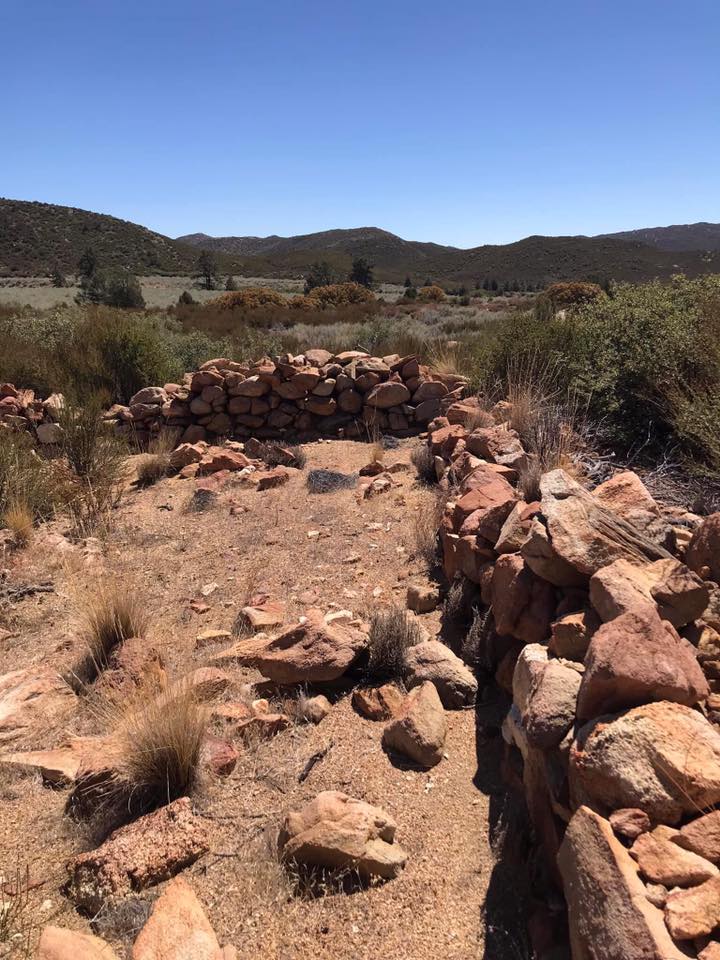
2004 photos by Jack Swords


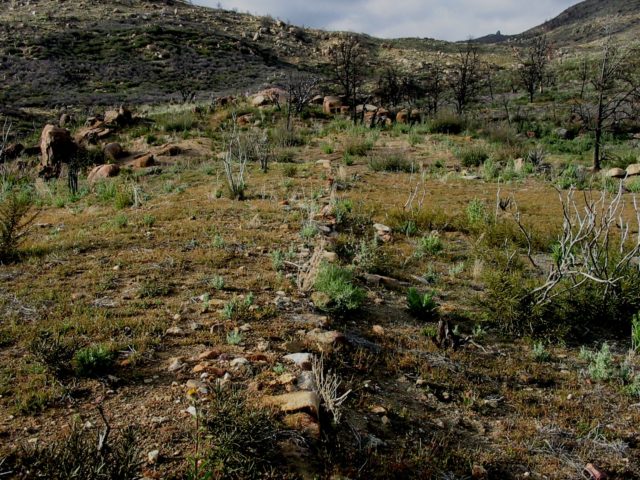
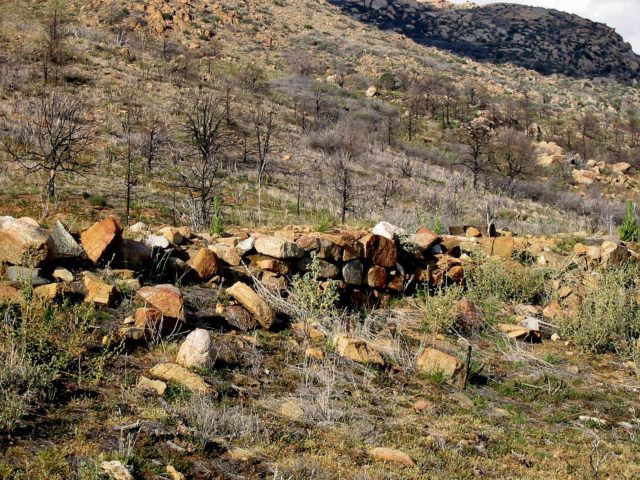

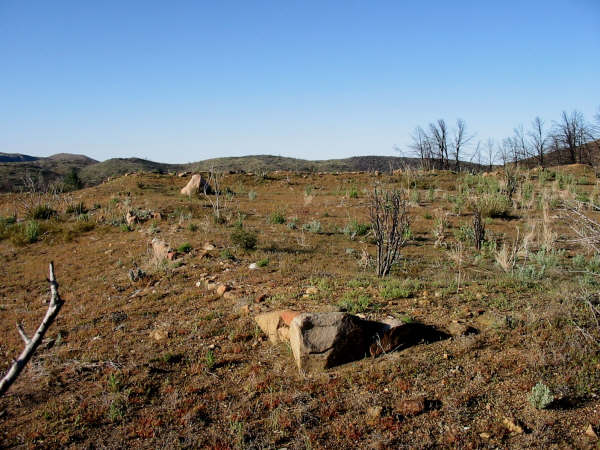

1955 photo by Howard Gulick 
1949 Marquis McDonald photo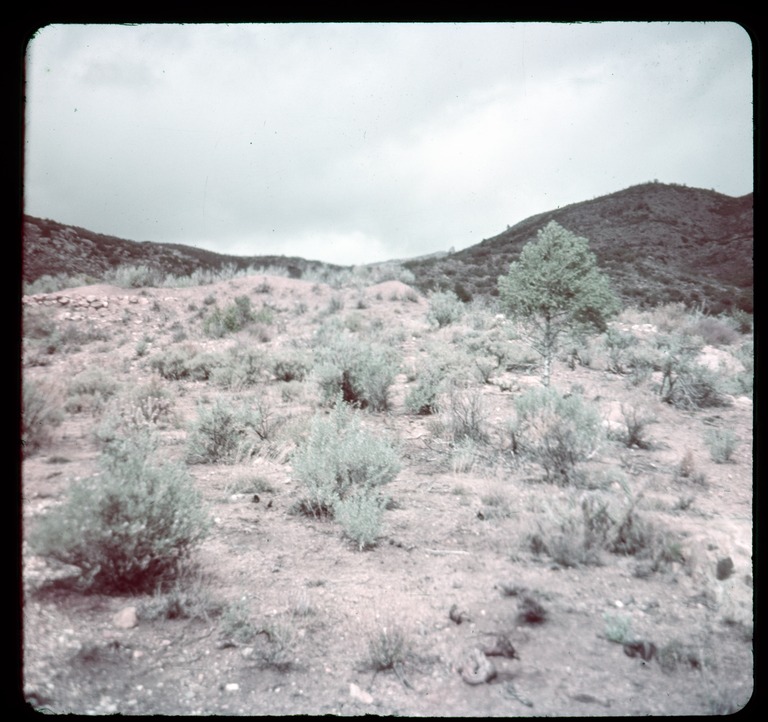
1930 photo by Margaret Bancroft 
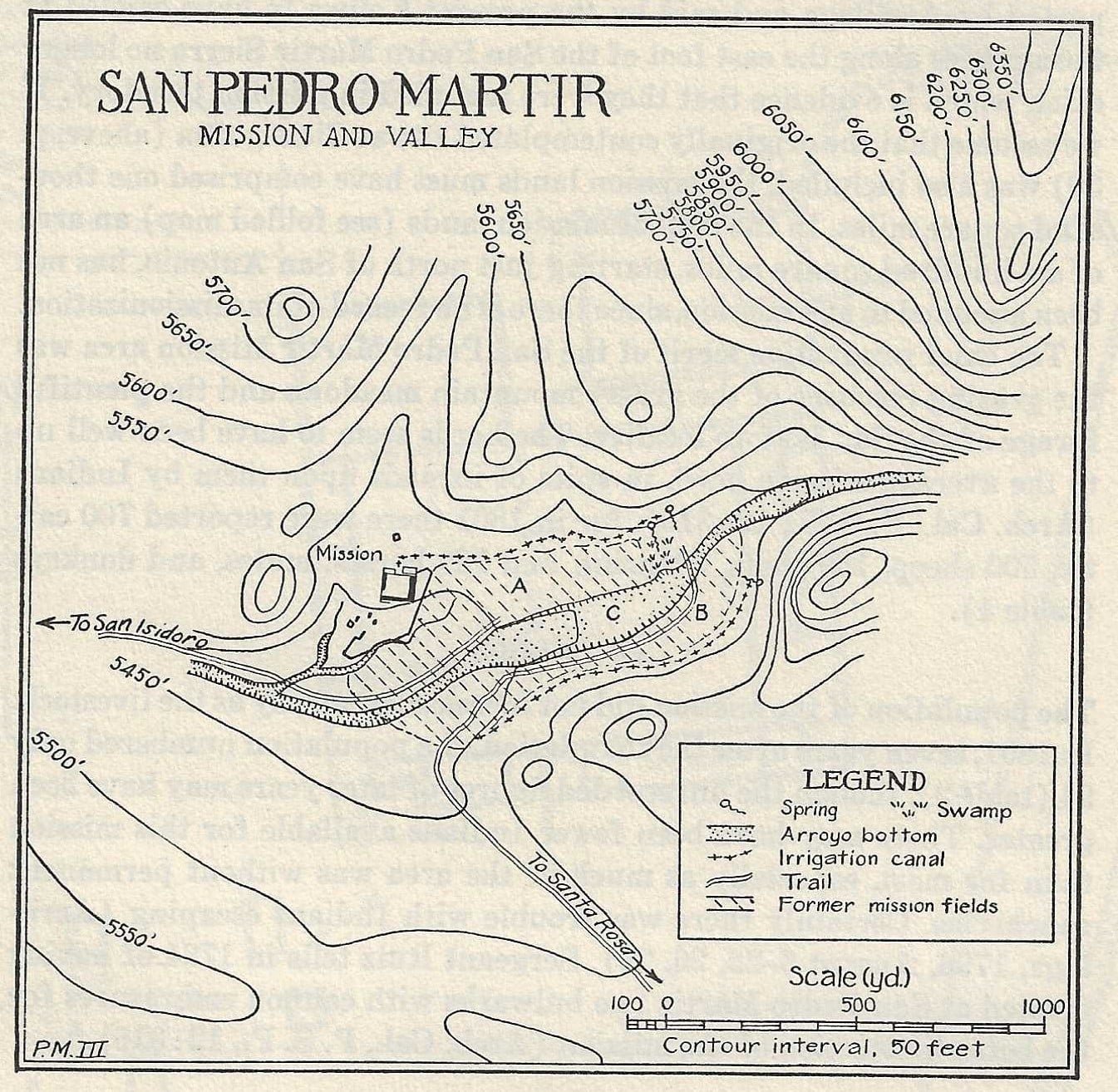
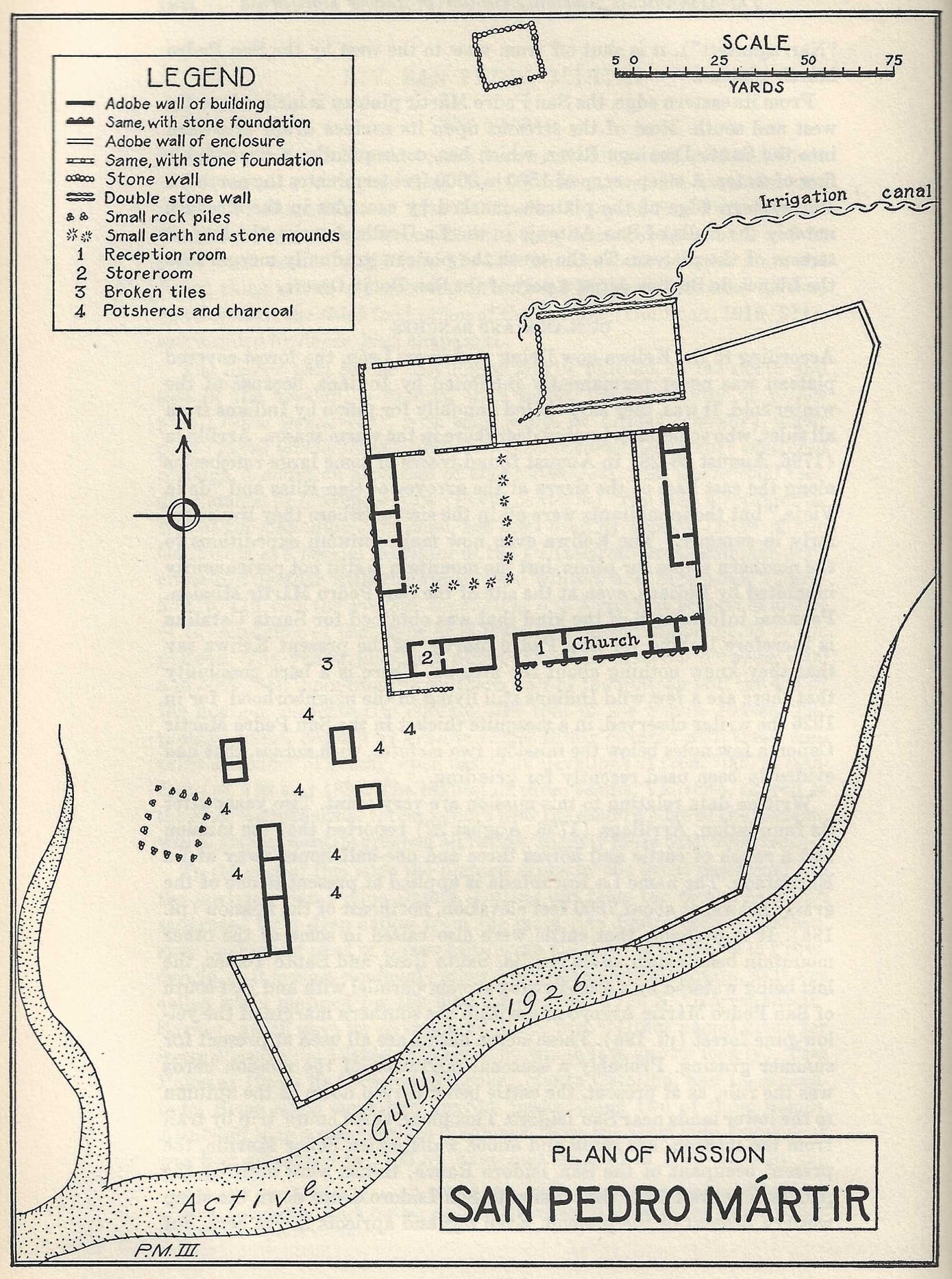
1926 mission plans by Peveril Meigs
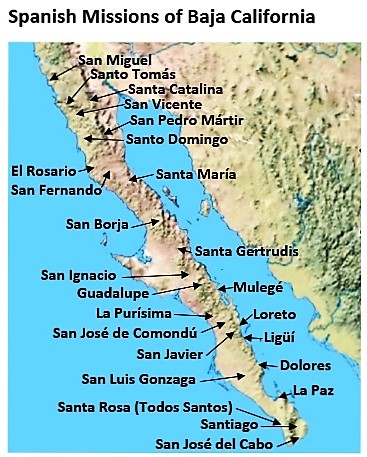
Regional Map

2004 Misión San Pedro Mártir Trail Details |
|
|
|
|
|
|
|
|
|
|
|
|

I hope this was interesting or informative for you! Please be welcome to join our Baja California Land of Missions Book Group, on Facebook: HERE
- All the missions, quick look and history, north to south: HERE
- Other mission photo pages plus more Baja California history: HERE
- VivaBaja.com home page

The following chapter is from my book, Baja California Land of Missions
Order your own copy from Amazon Books: HERE
#24 San Pedro Mártir de Verona (1794-1811)
By the end of 1791, the first five Dominican California missions were established along El Camino Real, securing and defining the corridor between the peninsular missions and San Diego. The interior could now be brought under Dominican influence with “mountain missions.” The Indian attacks would be halted by “Christianizing the heathens,” or so the Spanish government believed.
The northern Baja California mountain valleys and meadows were first explored by a Spanish soldier named José Velázquez in November 1775. Velázquez was ordered by Governor Neve to explore the northern gulf coast for a port closer than the Bay of San Luis Gonzaga to serve the new Dominican missions. Velázquez traveled north from Mission San Fernando found many Indians as well as oak and pine forests, crossing west to east over what would become known as the Sierra San Pedro Mártir. He climbed a high peak and saw the Colorado River and the surrounding desert but never left the sierra due to the uncertainty of finding drinking water. Velázquez was of the opinion that the Colorado River, where they would reach it, would be mostly sea water, thus not drinkable. Even though the goal of the expedition was not met, Velázquez did spark a desire of the Dominicans to establish a mission in the higher elevations of Baja California. In April 1785, Velázquez and California Governor Pedro Fages explored east from Mission San Vicente to the Colorado River seeking land routes from Mexico to California. Hostile Indians they encountered along the river would end further expeditions for over a decade.
In May 1793, California’s Lieutenant Governor José Joaquín de Arrillaga, in Loreto, authorized an expedition to find potential mountain mission sites. Two sites were found to be
the most suitable. One was northeast of San Vicente near a pass (El Portezuelo) leading to the Colorado River. The other potential mission site was east of Mission Santo Domingo in a high mountain meadow. In a letter dated January 15, 1794, Arrillaga stated that Mission San Pedro Mártir would be founded east of Santo Domingo that April.
Mission San Pedro Mártir de Verona was established on April 27, 1794, by Padre Caietano Pallás with Padre Juan Pablo Grijálva and Padre José Loriénte. The first site for the mission was at a place known to the native Kiliwa Indians as Casilepe and is a meadow, today called La Grulla. It was at an elevation of 6,785 feet. The exact location was unknown to historians until an expedition in 1991 revealed cut-stone foundation blocks in a pattern and scale that was of European origin. Some sixty Kilawa Indians joined the mission in its beginning.
Less than three months passed from its founding before a location change was requested. On July 18, 1794, Padre Pallás wrote the following to Governor Borica: “The new foundation has not continued with the happiness with which it began. The crops have frozen and I have determined to move it to work at another place, situated on the western slope of the Sierra about three leagues distant from the other.” On July 19, 1794, Padre Pallás wrote: “The missionary at San Pedro Mártir says he will move the week that now ends, because of frosts and annoyances.” On July 29, Pallás requested permission to execute the transfer from Casilepe to the location that was known to the Kilawa natives as Ajantequedo. Governor Borica responded on August 10 to permit the transfer to a more fertile and sheltered site. The second mission site is seven miles south but more importantly it is over 1,700 feet lower in elevation than the first.
The mission was in a region where the Kiliwa Indians only visited seasonally. A large workforce was not easy to assemble without there being a permanent local population. The complex at Ajantequedo was large and mapped out by Peveril Meigs during his field work on the Dominican missions in 1926. It resembled a fort with defensive walls for protection. Water for mission crops came from springs on opposite sides of the valley and above the stream. Irrigation canals were built from the two springs, and both ran for a half mile to the fields and to the mission. In 1926, Meigs found the mission floors were partly tiled with red nine inch square bricks, and pieces of red roof tiles were abundant. Meigs stated that San Pedro Mártir was a “highly developed, picturesque, and unique mission.” The elevation at the second site is 5,060 feet above sea level, making it the highest Spanish California mission.
In 1794 Sergeant José Manuel Ruiz wrote of the building of two bulwarks (fortifications) with cannon embrasures (openings). Ensign Alférez Bernal had been sent from San Vicente to San Pedro Mártir in May 1796 to investigate an incident; Bernal found that some soldiers were wounded, and some Indians killed in a skirmish. Lieutenant Governor Arrillaga left Loreto by boat in June 1796 for Bahía San Luis Gonzaga then traveled by land to Mission San Vicente. Arrillaga wrote in August 1796 that there was additional trouble with Indians “escaping.” While at San Vicente, Arrillaga learned that the neophytes of San Pedro Mártir had deserted and demanded that a new padre be assigned to them.
By 1800, the population had grown to only ninety-two. The primary crop was corn, but raising cattle was the most productive endeavor for this mission thanks to the extensive nearby pasturelands. In 1801, a new church made of adobe seventeen feet by sixty-nine feet and a long reception room thirty-nine feet by nineteen feet were constructed. Also, two rooms each nineteen feet by twenty-two feet plus a storage room nineteen feet by thirty-three feet were built. Sometime after 1801, the mission fell into decline. The lack of surviving records makes the cause for decline open to speculation.
In 1808, Padre Ramón López wrote a report on the status of all the peninsula missions. In it he states, “The two missions in the hills, Santa Catalina, and San Pedro [Mártir], cannot give what they don’t have. The minister at Santa Catalina formerly was able to send something, but now he struggles just to make ends meet. San Pedro [Mártir] is good for little more and likely will always be that way.” From this report, we learn that the mission existed at least until 1808. Once the mission was abandoned the remaining neophytes were transferred to Mission Santo Domingo. Details are uncertain about the cause for the abandonment or the exact year it closed. One research paper states that an especially cold winter closed the mission in 1811 (see also page 216).
The San Pedro Mártir mountain range is named for the mission. This mission is one of only two in Baja California not accessible by automobile. A two or three-day backpack or mule ride is required to reach the site. The usual approach is from San Isidoro, a mission visita ruin, then steeply up the mountain on the mission trail. See photo on page 216. These articles give additional details about this mission:
John Robertson, August 1966 (page 39-41): http://swdeserts.com/archive%20master%2037%2085.htm
John Foster, 1991: http://www.pcas.org/Vol33n3/333fostr.pdf
Max Kurillo, 1996: http://www.pcas.org/Vol33N3/333Krilo.pdf
Dominican Missionaries recorded at San Pedro Mártir:
Caietano Pallás, Pablo Grijálva, and José Loriénte Apr. 27, 1794
Rafaél Caballero 1794-1797
Antonio Caballero 1794-1797
Juan Ríbas 1797
Mariano Apolinário 1797-1798
José Caulas 1798
Miguel López 1798
José Loriénte 1798
Eudaldo Surroca 1803
José Portela 1806
Juan Ríbas 1806
Ramón de Santos 1806
See the other mission pages: https://vivabaja.com/baja-mission-albums/